
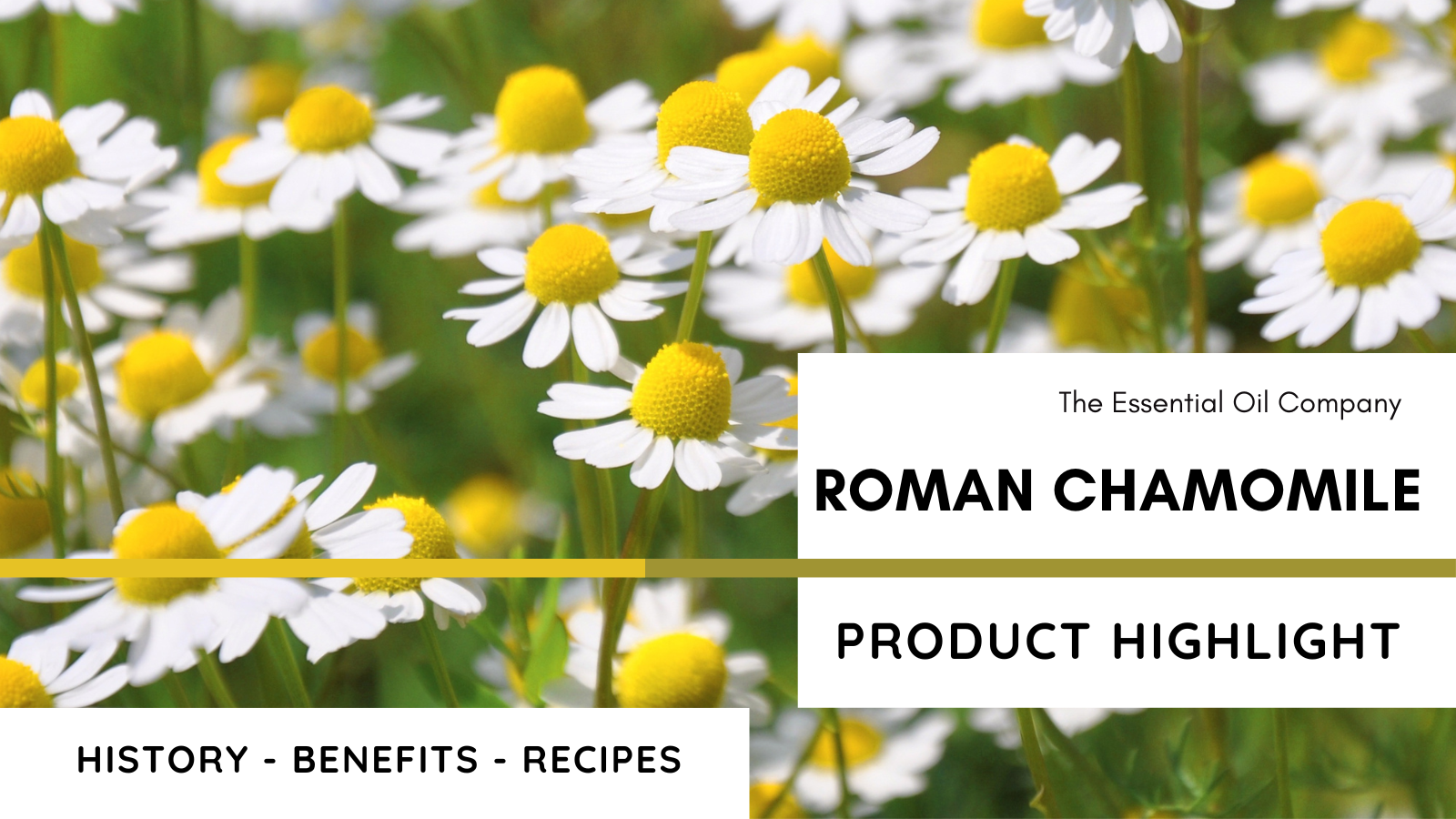
Roman Chamomile Essential Oil is steam distilled from the flowers of Anthemis nobilis, a flowering perennial in the Asteraceae family. The plant is also known as English chamomile, low chamomile, garden chamomile or ground apple. The oil is thin and clear, with a fruity, sweet and herbaceous aroma.
The plant
Roman Chamomile is native to areas of southern and western Europe and grows wild in a variety of climates and many types of soil. It is a low-growing plant. The foliage stays under six inches, while the solitary flower stalks reach ten to twelve inches. The leaves are finely dissected, soft and downy, bright to dark green, and grow alternately along stems that creep over the ground. The daisy-like flowers have prominent yellow centers surrounded by white ray petals. They typically bloom in June and July, with some continuing into early fall.
History
The word chamomile comes from the Greek chamaimēlon, "earth apple", said to be inspired by the sweet, apple-like scent of the plant. The Ancient Egyptians used Roman Chamomile in dedications to their gods and associated it with the sun god, Ra. Hieroglyphics show Egyptian women of nobility using chamomile oil in skincare, and it was also used in the embalming process. The Anglo-Saxons described it as one of the nine sacred herbs in the herb guide Lacnunga and used it in ceremonies.
During the Middle Ages Roman Chamomile was popular as a strewing herb at large gatherings and celebrations. When stepped upon, the flowers released their sweet floral fragrance into the air. Chamomile flowers were also added to beer to give the brew a bitter flavor, a role later taken over by hops.
How Roman Chamomile oil is made
Once the flowers begin to bloom in summer they can be harvested every fourteen days, up to six times per season. After harvest the flowers are quickly moved to kilns to be air dried before distillation. Ten pounds of fresh flowers reduce to around five pounds of dried plant material. The essential oil is extracted from the flowers by steam distillation, with a yield of 0.3% to 1% of the weight of the plant matter.
Recipes with Roman Chamomile Essential Oil
Chamomile, Clary Sage and Ylang Ylang Diffuser Blend
- 4 parts Roman Chamomile Essential Oil
- 4 parts Clary Sage Essential Oil
- 2 parts Ylang Ylang Essential Oil
Add water to your diffuser up to the fill line, then add the blend. The recipe is sized for a 200 mL ultrasonic diffuser, where it comes to about 0.5 mL of essential oil in total. Adjust the amount to the size and directions of your diffuser.
Chamomile, Lavender and Bergamot Bath Bombs
- Witch Hazel Extract in a Misting Spray Bottle
- Round Hard Plastic or Metal Molds
- 2 cups of Citric Acid
- 4 cups of Baking Soda
- 2 oz of Sweet Almond Oil
- 0.5 mL of Roman Chamomile Essential Oil
- 0.5 mL of Lavender Essential Oil
- 0.25 mL of Bergamot Essential Oil
Combine the citric acid, baking soda, sweet almond oil and essential oils in a bowl and mix using gloved hands. Spritz a small amount of witch hazel onto the top of the powder mixture and stir it in. Repeat until the mixture packs together easily, with a texture similar to wet sand. Scoop the mixture into each mold one at a time and pack it down tightly. Allow the bath bombs to dry for at least 24 hours and store them in an airtight container. To use, place one in the bath while the water is running and allow it to fully dissolve.
Chamomile and Vetiver Linen Spray
- 4 oz Amber Glass Bottle with Spray Top
- 2 oz of High Percentage Alcohol
- 2 oz of Witch Hazel Extract
- 1 mL of Roman Chamomile Essential Oil
- 0.5 mL of Vetiver Essential Oil
Add the alcohol to the bottle. Add the essential oils and fill the remainder of the bottle with witch hazel, leaving a little space at the top. Shake well before each use. Spray on linens and around the bedroom.
Find Roman Chamomile Essential Oil in our essential oils collection.