
Skip to content

Essential Oil · Floral & Romantic

Lavender Oil

Lavandula angustifolia

Lavender is the most recognized and versatile of all essential oils - a soft, sweet-floral steam distillation of Lavandula angustifolia flowers, prized in perfumery, aromatherapy, and natural formulation alike.

floralherbaceoussweetfreshsoftcreamy
Lavender Oil
Plant part
Flower
Extraction
Steam Distillation
Origins
France, Bulgaria
Chemical class
Monoterpenol, Ester
CAS
8000-28-0
FEMA
2622
INCI
Lavandula Angustifolia Oil

Watch

Lavender Oil from a 30-Year Insider: Altitude, Chemistry & Chirality

Origin story

True lavender, Lavandula angustifolia, grows best at altitude in the sunbaked hills of Provence and across the Bulgarian Rose Valley. Traditionally harvested in high summer as the flowers reach peak oil content, the tops are cut and steam distilled to capture a soft, rounded floral aroma quite distinct from the sharper, more camphoraceous lavandin.

Production has shifted over time: Bulgaria and Eastern Europe now lead commercial output, while France remains the traditional benchmark. Altitude matters - high-altitude French lavender, grown as high as roughly 1,600 meters, is sweeter, fresher, and lighter than valley or Bulgarian lots, and the finest French material can command around $200 per kilogram.

Extraction & distillation

Lavender oil is produced by steam distillation of the fresh or partially dried flowering tops. Distillation time and pressure are managed carefully: a gentle, slower distillation preserves the delicate esters that give fine lavender its sweetness, while pushing the still too hard can coarsen the profile.

Chemistry

Lavender's character comes primarily from two constituents working together: linalool (a soft-floral monoterpene alcohol) and linalyl acetate (a sweet, fruity ester). The balance between them, along with minor components, distinguishes a fine high-altitude Lavandula angustifolia from lower-grade material and from lavandin hybrids.

Category-typical numbers tell the quality story: great high-altitude lots can reach roughly 46% linalyl acetate with linalool around 38-41%, while camphor and 1,8-cineole are near-absent in the finest lavenders - the sharper, more medicinal notes that mark lavandin, the high-yield lavender-and-spike-lavender hybrid. Minor markers such as lavandulol and lavandulyl acetate help distinguish grades.

Linalool is also a chiral molecule, and its enantiomer ratio differs by botanical source. Chirality analysis can therefore reveal whether an oil's linalool truly came from lavender or was blended in from sources like ho wood or coriander - a practical purity test.

How lavender is used

  • Fine fragrance and natural perfumery as a heart note and classic fougere component
  • Aromatherapy blends valued for their calming, relaxing character
  • Natural soap, candle, and personal-care formulation
  • Linen and home fragrance
  • Flavor applications - an emerging use for true lavender
  • Consumer-goods label callouts - everyone loves lavender on a label

Lavender is among the most-studied essential oils; research continues to explore linalool and its associations with calm and sleep.

Why we use it

We source Lavandula angustifolia for its true-lavender profile rather than the cheaper, more camphoraceous lavandin. Origin matters: French and Bulgarian angustifolia each bring a distinct balance of linalool and linalyl acetate, and we select lots for roundness and sweetness rather than yield alone.

The practical toolkit runs wider than fine lavender alone: rigorously qualified pure lots - origin, altitude, even chirality - where a true-lavender profile is the point, and lavandin or a standardized Lavender 40/42 where soap, shampoo, or lotion work weighs impact, safety, and cost.

Frequently asked questions

What is the difference between lavender and lavandin?

Lavandin is a hybrid of lavender and spike lavender. It yields much more oil per hectare and keeps high linalyl acetate and linalool, but carries significant camphor and cineole - floral yet sharper and more medicinal, with far more impact and tenacity. Fine lavender has almost none of either.

What is Lavender 40/42?

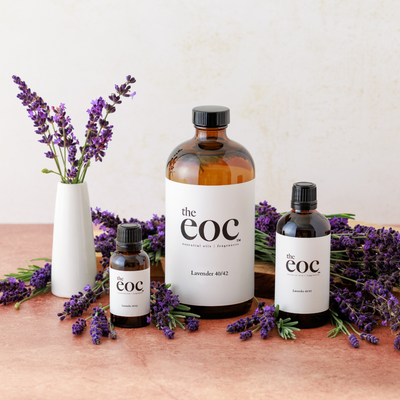
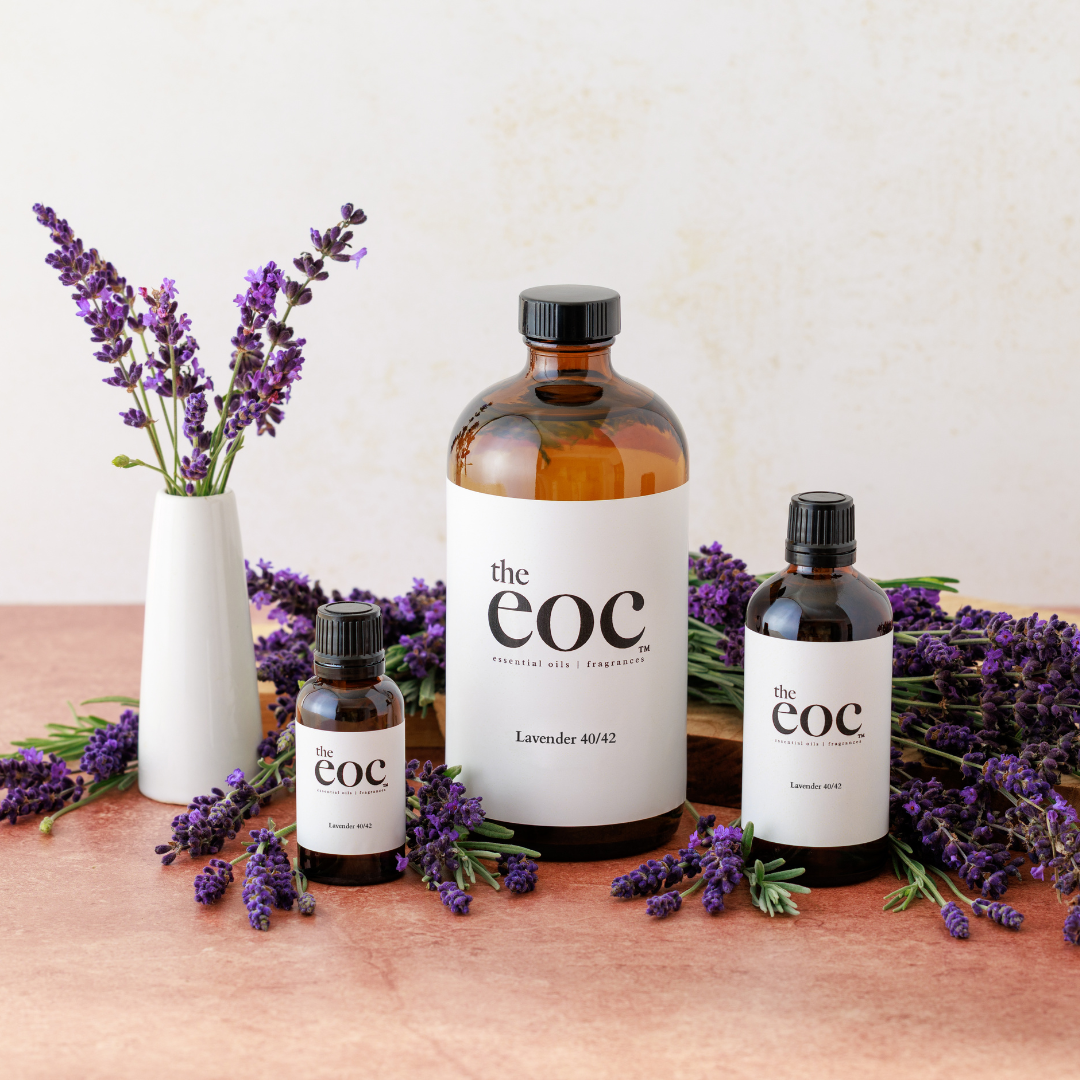
The most common commercial lavender in the US market - a standardized blend (sometimes fully natural, sometimes natural and artificial) named for its linalyl acetate content, and far more affordable than fine French high-altitude lavender.

Why does altitude matter for lavender?

High-altitude French lavender - grown as high as roughly 1,600 meters - develops higher linalyl acetate and a sweeter, fresher, lighter character than valley or Bulgarian lots. It is the benchmark connoisseurs reach for.

How can testing tell real lavender from a blend?

Linalool is a chiral molecule, and its enantiomer ratio differs by botanical source. Chirality analysis can reveal whether an oil's linalool truly came from lavender or was blended in from sources such as ho wood or coriander.
Safety notes

Lavender is among the gentler essential oils but should still be diluted appropriately for topical use. Oils rich in linalool can oxidize over time; store tightly closed away from heat and light.