

Patchouli essential oil is steam distilled from the leaves of Pogostemon cablin, a bushy herb in the mint family. The oil is thick, yellow to deep amber brown, with a musky, rich, earthy scent and a slight sweetness.
Plant details
Patchouli (Pogostemon cablin) is a flowering plant in the family Lamiaceae, commonly known as the mint family. The plants grow as bush-like perennial herbs with straight, purplish stems, two to three feet tall. The leaves are fuzzy, green and oval. In stronger sunlight the plants grow leaves that are small but thick and rich in essential oil. With less sunlight the leaves grow larger but hold less oil. The small white flowers are tinged with purple at the edges.
Patchouli is native to islands in Southeast Asia such as the Philippines, Sri Lanka and Indonesia. It is now cultivated commercially in many tropical areas, notably South America, the Caribbean Islands, Asia and Madagascar.
History
It is believed that the Pharaoh Tutankhamun had ten gallons of patchouli oil inside his tomb. Patchouli may take its name from the Hindi word "pacholi," which means "to scent." Patchouli oil was used to scent fabrics from India that were sold and traded in the nineteenth century, and the scent is said to have told buyers that a fabric was authentically from Asia. Many English and French fabric and clothing makers scented their own cloth with patchouli to help it sell. The name may also come from the ancient Tamil words "patchai" and "ellai," which together mean "green leaf."
Patchouli became so valuable to early European traders that they would exchange one pound of the herb for one pound of gold. Patchouli has insect repelling properties that made it beneficial for protecting fabric that was traveling along trade routes to Europe. The leaves were imported along the Silk Road, reaching England in the middle of the nineteenth century, where dried patchouli was widely used in potpourri by the Victorian upper class.
Soon after, the perfume industry picked it up. Perfume makers often use patchouli essential oil as a fixative for more volatile notes because of its great stability. Its musky scent is commonly associated with the hippie generation, and its use became very widespread in the 1960s. The counterculture of that decade took to patchouli as a signature: it was worn as a perfume on its own, burned as incense, and used to scent the imported Indian cottons and embroidered pieces that defined 1960s hippie fashion. That association has never faded, and it is still the first thing many people picture when they smell the oil.
Extraction and aroma
Patchouli plants reach maturity in around six to seven months, at which point they can be harvested, and the leaves can be cut more than once a year. The few pairs of leaves at the top of each plant are said to hold the oil with the strongest aroma. The leaves are often harvested by hand during the hot part of the day, gathered into bundles and left to partially dry before extraction.
The essential oil is extracted by steam distillation of the leaves. It is thick and ranges in color from yellow to a deep amber brown. The scent is musky, rich and earthy with a slight sweetness. Patchouli is one of the few essential oils whose aroma develops and improves as the oil ages.
How makers use patchouli
Patchouli is a perfumery fixative first, and it is also used to scent natural deodorant. In the recipes below it is blended with cedarwood, bergamot and frankincense, with lavender and chamomile, and with lavender, ylang ylang and jasmine.
Recipes
Patchouli, Cedarwood and Bergamot Diffuser Blend
Ingredients
- 3 parts Patchouli Essential Oil
- 3 parts Cedarwood Essential Oil
- 2 parts Bergamot Essential Oil
- 2 parts Frankincense Essential Oil
Instructions
Add water to your diffuser up to the fill line, then add the blend. The recipe was written for a 200 mL ultrasonic diffuser, using about 0.5 mL of oil in total. Adjust the amount to the size and directions of your diffuser.
Patchouli and Lavender Linen Spray
Ingredients
- 4 oz Amber Glass Bottle with spray top
- 2 oz High Percentage Alcohol
- 2 oz Witch Hazel Extract
- 0.4 mL Patchouli Essential Oil
- 0.4 mL Lavender Essential Oil
- 0.2 mL Chamomile Essential Oil
Instructions
Add 2 oz of high percentage alcohol to the bottle. Add the essential oils and fill the remainder of the bottle with witch hazel, leaving a little space at the top. Shake well before each use. Spray on linens.

"Floral Passion" Solid Perfume
Ingredients
- 1.7 oz Amber Glass Jar or small metal tins
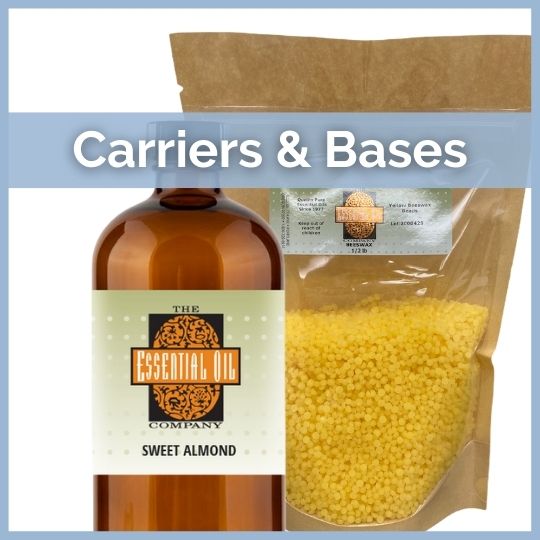
- 30 mL Sweet Almond Oil
- 30 mL Beeswax Pearls
- 0.5 mL Patchouli Essential Oil
- 0.5 mL Lavender Essential Oil
- 0.25 mL Ylang Ylang Essential Oil
- 0.25 mL Jasmine Absolute
Instructions
Place the sweet almond oil and beeswax pearls in a bowl and melt on a double boiler. Remove the bowl from the heat and stir, allowing it to cool for a moment. Add the essential oils and stir again. Pour the liquid into a glass jar or small metal tins. Place the lid on the container and allow the perfume to fully harden for approximately 30 to 45 minutes before use.
Find the oil used in these recipes here: Patchouli Dark essential oil.