
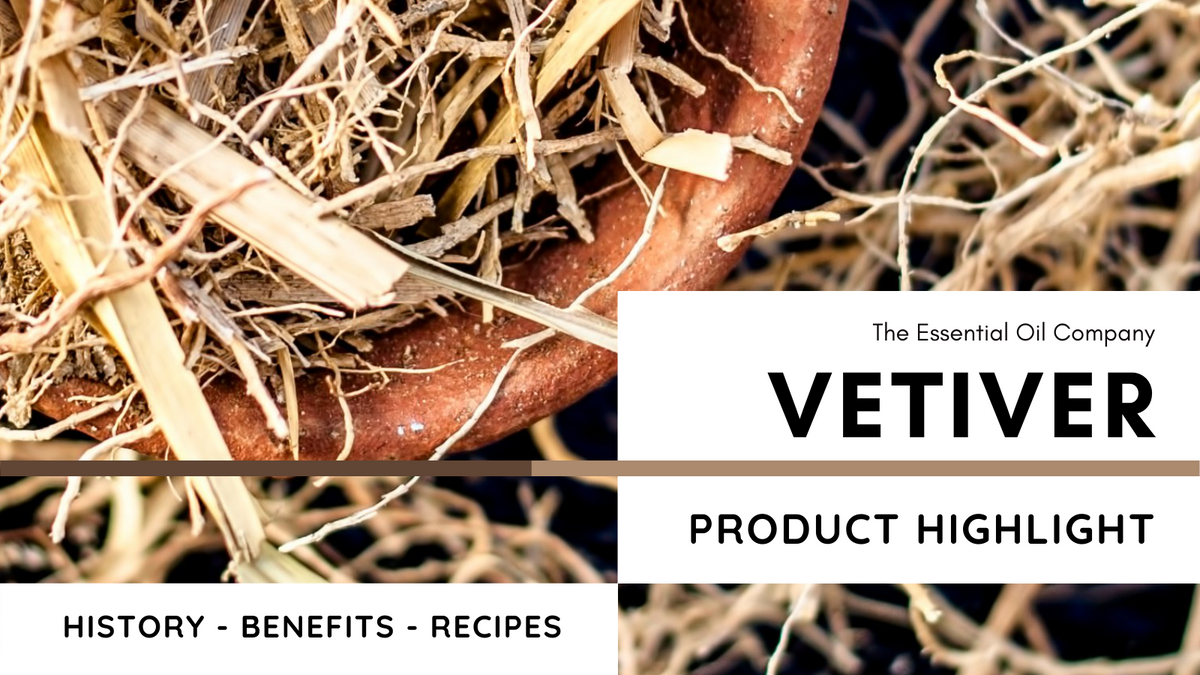
Vetiver (Chrysopogon zizanioides) is a fragrant grass in the Poaceae family, similar to other aromatic grasses like Lemongrass and Citronella. It is native to Malaysia, India, Pakistan, Sri Lanka and Bangladesh. Vetiver essential oil is steam distilled from the roots of the plant. It is very viscous, amber to dark brown, and has a deep, earthy aroma with sweet and balsamic notes.
The plant
Vetiver grows in large bunches and usually reaches around five feet in height. Its leaves are long, narrow, rigid blades, bright to light green in color. In ideal growing conditions they can reach up to ten feet long and are around a third of an inch wide. The flowers are a brownish-purple color with three stamens and grow in pairs.
Unlike the spreading, carpet-like root structure of many other grasses, Vetiver roots grow deep into the soil. They can reach depths of over ten feet in the first year of growth, which makes the plant more resistant to drought. This drought resistance, along with its height and density, is why Vetiver is widely planted as a border between fields and properties and along roadsides.
History
In India and Sri Lanka, Vetiver oil has earned the name “The Fragrance of the Soil”. Since ancient times, almost every part of the plant has been put to use. In India and in areas of Africa, Vetiver leaves were woven into baskets, window coverings, roofs and awnings.
In tropical countries, the roots were traditionally used to make evaporative coolers, a way to cool interior spaces before electricity. The roots were woven together with rope, soaked in water and hung in windows and doorways to cool the hot air entering the home. This also spread an earthy fragrance through the space. The roots were made into grass mats for the same reason.
Vetiver essential oil has been widely used for its aroma since the Middle Ages. Considered by some to have a more masculine scent, it is a common ingredient in men’s cologne.
Harvest and extraction
Vetiver is generally harvested in winter, between December and February. It is often harvested by hand, with the grass tufts dug up completely to reach the roots. Where mechanical harvesting is used, a tractor-drawn plow uproots the plants.
Vetiver grown for essential oil is most often harvested eighteen to twenty-four months after planting. The timing balances essential oil yield and quality. Plants older than two years may contain oil of a higher quality, but the yield is much lower.
After harvest, the roots are separated from the plant, cleaned and dried. The essential oil is extracted from the roots by steam distillation and is often left to age for several weeks. Like sandalwood and patchouli, Vetiver develops and improves in aroma as it ages.
Aroma and use in perfumery
Vetiver essential oil smells deep and earthy, with sweet and balsamic notes. Its solubility in alcohol and low evaporation rate make it a useful perfumery ingredient. The woodsy aroma is especially prized in men’s fragrances for its versatility.
Recipes with Vetiver Essential Oil
Vetiver, Lavender and Bergamot Diffuser Blend
Ingredients
- 3 parts Vetiver Essential Oil
- 3 parts Lavender Essential Oil
- 2 parts Bergamot Essential Oil
- 2 parts Ylang Ylang Essential Oil
Instructions
Add water to your diffuser up to the fill line, then add the blend. The original recipe totals 0.5 mL of essential oil for a 200 mL ultrasonic diffuser. Adjust the amount to the size and directions of your diffuser.
Vetiver and Patchouli Room Spray
Ingredients
- 4 oz Amber Glass Bottle with Spray Top
- 2 oz of High Percentage Alcohol
- 2 oz of Witch Hazel Extract
- 0.75 mL of Vetiver Essential Oil
- 0.5 mL of Patchouli Essential Oil
- 0.5 mL of Lavender Essential Oil
Instructions
Add the alcohol to the bottle. Add the essential oils and fill the remainder of the bottle with witch hazel, leaving a little space at the top. Shake well before each use.

Forest Fresh Roll-On Cologne
Ingredients
- 10 mL Amber Glass Roll-On Bottle
- 10 mL of Fractionated Coconut Oil
- 0.5 mL of Vetiver Essential Oil
- 0.25 mL of Cedarwood Essential Oil
- 0.15 mL of Fir Needle Essential Oil
Instructions
Add the essential oils to the bottle. Fill the rest of the bottle to the top with fractionated coconut oil. Replace the rollerball and cap and shake gently.
Vetiver and Rosemary Body Balm
Ingredients
- 1 oz of Cocoa Butter
- 1 oz of Shea Butter
- ½ oz of Sweet Almond Oil
- ½ oz of Jojoba Oil
- 1.5 mL of Vetiver Essential Oil
- 1 mL of Rosemary Essential Oil
- 1 mL of Lavender Essential Oil
Instructions
Add the cocoa butter and shea butter to a double boiler and heat on low to medium heat until fully melted. Remove from heat and stir in the sweet almond oil, jojoba oil and essential oils. Pour into a jar or tin and allow to cool and harden for several hours.
The oils that blend with Vetiver in these recipes are in our essential oils collection.