
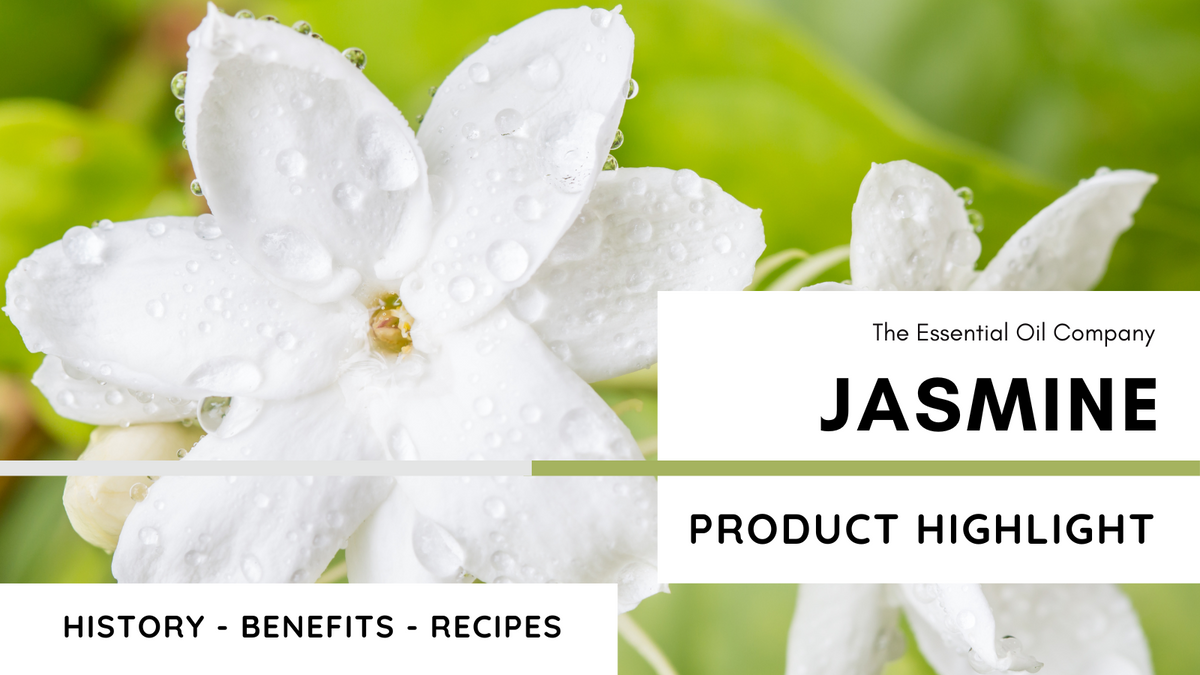
Jasmine Sambac (Jasminum sambac) is a species of flowering plant in the Oleaceae family. It is native to tropical regions of Southeast Asia and India, and is cultivated there as well as in other parts of Asia, the Middle East, Madagascar, Northern Africa and Central America. Jasmine Sambac Absolute is solvent extracted from the flowers. It has a medium consistency and an intensely rich, sweet floral aroma.
The plant
Jasmine Sambac grows as a vine or small shrub, between one foot and ten feet in height. The flowers are white, around three-quarters of an inch to one and a half inches across, with five to nine lobes. They grow at the ends of branches in clusters of three to twelve. As a night-blooming variety, the flowers open around sundown and close in the morning.
The leaves are smooth and ovate, with a small number of hairs at the base. They grow opposite each other along the vines, sometimes in clusters of three. The plant produces small berries, less than half an inch in diameter, that range from purple to black.
History
The name is thought to have evolved from the Medieval Arabic word “zanbaq”, which referred to the oil of all jasmine flowers. In late Medieval Latin the term became “sambacus” and still covered all jasmine varieties. After the medieval period, “sambac” was adopted as the label for this species in Latin plant taxonomy. Swedish botanist Carl Linnaeus first described the plant as Nyctanthes sambac in 1753. In 1789, Scottish botanist William Aiton reclassified it to the genus Jasminum. Aiton is also credited with coining the common English name “Arabian Jasmine”, likely a reference to the wide cultivation of jasmine in Saudi Arabia and other Middle Eastern countries.
According to early Chinese documentation, Jasmine Sambac originated in eastern South Asia and Southeast Asia. Trade along the Silk Road carried it, with other species of jasmine, into Persia and the Middle East, where it was grown in gardens. It reached Europe in the early seventeenth century and quickly became a staple of traditional French perfumery.
Commercial production of jasmine oil began in the Grasse region of France in the middle of the nineteenth century. Grasse was once considered the largest producer in the world, with production peaking in the 1920s and 1930s. Jasmine Sambac is still cultivated and processed there, but Egypt, India and Morocco have taken over the market in more recent years.
Jasmine Sambac holds symbolic status in many cultures. It is the national flower of the Philippines, where it is known as “sampaguita”, and one of three national flowers of Indonesia, where it is known as “melati putih”. In India and the Philippines, jasmine is viewed as a symbol of divine hope, fidelity and love. It is often part of wedding ceremonies, and married women in south India sometimes wear jasmine flowers on their fingers, similar to wedding rings.
Traditional extraction
Jasmine Sambac has always been one of the preferred species for oil extraction because of the quality of its fragrance. Traditionally, the absolute was made through a lengthy, labor-intensive process. Fresh petals were spread evenly over a layer of cold animal fat and left for several hours so the fat could absorb the essential oils of the flowers. The petals were swapped out periodically until the fat was fully saturated with the aroma of jasmine. The resulting fragranced pomade was dissolved in alcohol to draw the oils out of the fat, and the alcohol was then evaporated to leave the absolute.
Harvest and extraction today
Jasmine Sambac is harvested during May and June, when the flowers begin to bloom. Because it blooms at night, it must be harvested at night, when the flowers are most fragrant. The blossoms are picked carefully by hand so the plant is not damaged. It can take nearly fifty thousand flowers to make five milliliters of Jasmine Absolute.
The absolute is made by solvent extraction. The petals are spread on trays and submerged in a vessel of solvent, such as hexane or ethanol, with hexane the more common option. The flowers steep just long enough for the fragrance to be extracted without other, nonfragrant molecules migrating into the liquid. The petals are then removed and the solvent is evaporated, leaving a yellowish-brown waxy substance with an extremely concentrated jasmine aroma.
To create the absolute, grain alcohol is added to the waxy substance. The mixture is heated and then cooled to remove the wax and color. Finally, the alcohol is evaporated to leave the Jasmine Absolute.
Use in perfumery
In perfumery, Jasmine Absolute acts as a middle note that adds complexity to a fragrance and gives blends a sense of balance. It can lift lighter aromas such as citrus or other floral notes, and it also holds its own with heavy, bold base notes. Jasmine Absolute is favored in classically feminine scents and makes a good base on which to build a floral bouquet fragrance.
Recipes with Jasmine Absolute
Jasmine, Orange and Sandalwood Diffuser Blend
Ingredients
- 4 parts Jasmine Absolute
- 3 parts Sweet Orange Essential Oil
- 2 parts Frankincense Essential Oil
- 2 parts Sandalwood Essential Oil
Instructions
Add water to your diffuser up to the fill line, then add the blend. The original recipe totals 0.55 mL for a 200 mL ultrasonic diffuser. Adjust the amount to the size and directions of your diffuser.

Night Bloom Roll-On Perfume
Ingredients
- 10 mL Amber Glass Roll-On Bottle
- ⅓ oz of Sweet Almond Oil
- 0.5 mL of Jasmine Absolute
- 0.25 mL of Bergamot Essential Oil
- 0.15 mL of Ylang Ylang Essential Oil
Instructions
Add the jasmine absolute and essential oils to the bottle. Fill the rest of the bottle to the top with sweet almond oil. Replace the rollerball and cap, shake gently, and roll across the wrists and neck.
Jasmine and Neroli Foaming Bath Salts
Ingredients
- 1 cup of Coarse Sea Salt
- ½ cup of Epsom Salt
- 1 oz of Unscented Liquid Castile Soap
- ½ oz of Jojoba Oil
- 0.75 mL of Jasmine Absolute
- 0.75 mL of Neroli Essential Oil
- 0.5 mL of Patchouli Essential Oil
Instructions
Add the coarse sea salt and Epsom salt to a large bowl and mix thoroughly. In a small bowl, stir the castile soap, jojoba oil, jasmine absolute and essential oils together until well combined. Add the liquid mixture to the salts and stir until the salt is evenly coated. Add about ½ cup to a warm bath and stir to dissolve.
Related reading
The oils that blend with Jasmine in these recipes are in our essential oils collection.