
Geranium (Pelargonium graveolens) is an evergreen perennial shrub in the Geraniaceae family. It is native to regions of Southern Africa and thrives in warm temperate and tropical environments. Geranium Essential Oil is steam distilled from the leaves. It is thin and pale yellow, with a fresh, sweet, rosy floral aroma.
The plant
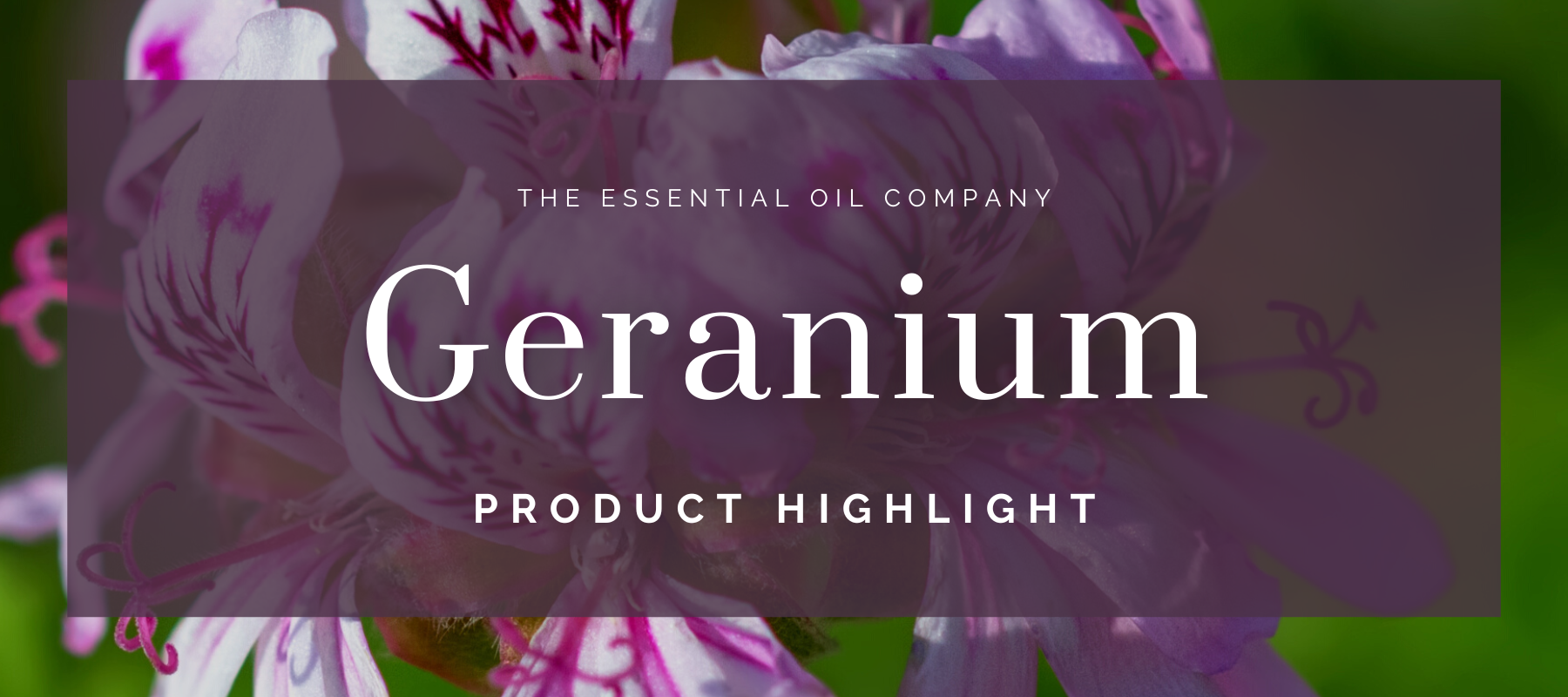
Geranium plants can grow up to five feet in height and around three feet in diameter. The leaves grow along long stalks and are deeply lobed and detailed in shape. They are bright green, sometimes variegated, with a velvet-like texture that comes from the many glandular hairs covering them. The flowers grow in clusters at the end of the stem and vary from white to pale pink to deep pink. They are small, with five oblong, narrow petals and two to seven stamens in each bloom.
History
Geranium was introduced to Europe in the early seventeenth century, and by the middle of the century trade had been established to acquire the plants. The Dutch East India Company traded with South Africa for Geranium, which was taken to Holland and bred for specific qualities. In seventeenth-century Europe, the upper class used fresh Geranium leaves in finger bowls.
Early colonists brought Geranium to the Americas, and it is said that Thomas Jefferson grew the plants in the White House gardens. The flowers and leaves became popular in flower arrangements in the nineteenth and twentieth centuries. In her 1932 book The Fragrant Path, Louise Beebe Wilder wrote, “Once no bouquet was deemed complete without a bit of this fragrant foliage.”
Geranium has always been popular for its powerful aroma, and production of the essential oil has been attempted around the world. Commercial production began at the start of the nineteenth century in the Grasse region of southern France. From there, plants were exported to newly colonized countries such as Algeria to develop new areas of the essential oil industry. Not every attempt succeeded. Small amounts of the oil were produced in Spain, Madagascar, Morocco and other regions of Africa through the nineteenth and twentieth centuries.
Around 1930, a French grower named Charles Gernier produced the first small quantities of Geranium essential oil in Egypt, using plants imported from Grasse. The region remains a major producer of the oil. When coffee became unprofitable for farmers in the Congo in the early 1930s, they turned to essential oil plants such as Geranium, and by the late 1940s there were three commercial distilleries in the area. Today, Geranium essential oil remains a popular and versatile choice in perfumery.
Harvest and extraction
Geranium grown for essential oil is harvested around four to six months after planting and can be cut three to five times a year. The essential oil is concentrated in the leaves and young shoots.
When Geranium is harvested by hand, one complete stalk is left at each cutting to keep feeding the plant and support growth. When it is machine harvested, the entire plant is cut at a height that allows regrowth. As a long-term perennial, Geranium can be harvested for three to five years.
After harvest, the leaves are left to dry for three to six days to reduce moisture content and increase essential oil recovery. Geranium essential oil is then extracted from the leaves by steam distillation.
Recipes with Geranium Essential Oil
Geranium, Lavender and Vetiver Diffuser Blend
Ingredients
- 3 parts Geranium Essential Oil
- 3 parts Lavender Essential Oil
- 2 parts Vetiver Essential Oil
- 2 parts Bergamot Essential Oil
Instructions
Add water to your diffuser up to the fill line, then add the blend. The original recipe totals 0.5 mL of essential oil for a 200 mL ultrasonic diffuser. Adjust the amount to the size and directions of your diffuser.
Geranium and Cedarwood Lotion Bar
Ingredients
- 4 oz of Sweet Almond Oil
- 4 oz of Cocoa Butter Wafers
- 4 oz of Beeswax Pearls
- 1 mL of Geranium Essential Oil
- 1 mL of Cedarwood Essential Oil
- 0.5 mL of Chamomile Essential Oil
- Heat-Safe Molds
Instructions
Combine the sweet almond oil, cocoa butter and beeswax in a heat-safe bowl and melt over a double boiler. Stir continuously until the ingredients are fully melted and combined. Remove the mixture from heat and let it cool for a few minutes. Add the essential oils and stir gently until they are completely integrated. Carefully pour the mixture into the molds and gently tap the molds on the work surface to release any air bubbles. Allow the lotion bars to cool and harden for several hours before removing them from the molds.
Geranium, Lavender and Chamomile Linen Spray
Ingredients
- 4 oz Amber Glass Bottle with Spray Top
- 2 oz of High Proof Alcohol
- 2 oz of Witch Hazel Extract
- 0.5 mL of Geranium Essential Oil
- 0.5 mL of Lavender Essential Oil
- 0.5 mL of Chamomile Essential Oil
Instructions
Add the alcohol to the bottle. Add the essential oils and fill the remainder of the bottle with witch hazel, leaving a little space at the top. Shake well before each use. Spray on linens and around the room.
Geranium, Peppermint and Cypress Bath Salts
Ingredients
- 1 cup of Epsom Salt
- ½ cup of Coarse Mineral Sea Salt
- ¼ cup of Fractionated Coconut Oil
- 0.5 mL of Geranium Essential Oil
- 0.5 mL of Peppermint Essential Oil
- 0.5 mL of Cypress Essential Oil
Instructions
Mix all the ingredients thoroughly and store them in a tightly closing container. Add a handful to a warm bath.
Related reading
See sizes and details on the Geranium Essential Oil product page.