
Clary Sage (Salvia sclarea) is a perennial herb in the Lamiaceae family. It is native to the northern Mediterranean region and southern France, as well as some parts of northern Africa and central Asia. Clary Sage Essential Oil is steam distilled from the leaves and flowering tops. It is thin and clear, with a sweet, earthy, herbaceous aroma.
The plant
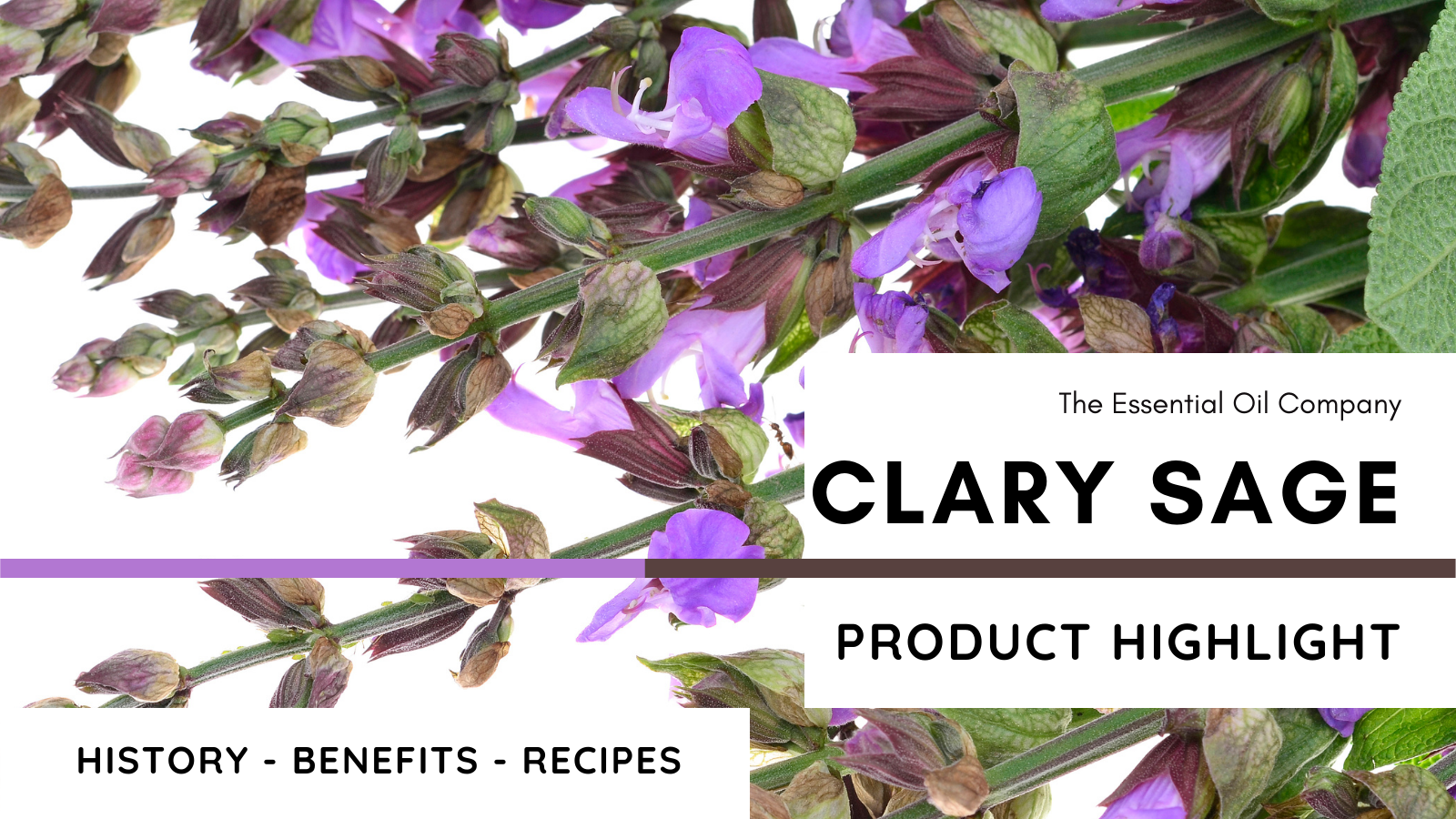
Clary Sage grows three to four feet tall on thick, squared stems covered in hairs. The leaves are long, reaching approximately 12 inches at the base and around six inches higher on the stems. They have a wrinkled appearance and are covered with fine glandular hairs.
The flowers vary from white to pale purple to bluish purple and grow in loose clusters of two to six. The blooms open widely and the petals have pointed tips. Clary Sage is a short-lived perennial that typically lives for two seasons, with some plants continuing weakly for three to four years.
History
The name Clary Sage comes from “clarus”, a Latin word that means “cleansing” or “clarifying”. The plant is documented as far back as the fourth century BCE in the writings of Theophrastus, and it appears in the first-century CE writings of Pliny the Elder and Dioscorides. Nicholas Culpeper wrote about it in his Complete Herbal in 1653.
Clary Sage oil was also used in making wine and beer. In sixteenth-century Germany, elderflower-infused Clary Sage oil was added to Rhine wines to make a more potent variety called Muscatel. Because of this use, the essential oil was sometimes referred to as Muscatel Oil.
Clary Sage essential oil has been a valued ingredient in perfumery for many years. It is prized for a rich aroma and a slow evaporation rate that helps to anchor fragrance blends.
Harvest and extraction
Much like lavender, Clary Sage can thrive at high altitudes and produces more essential oil there than at lower elevations. The plants are harvested in late summer, during the flowering period.
When harvested by hand, the plant is cut with a sickle, taking care not to include much of the woody stalk. This part of the plant contains little to no essential oil, so it is best to distill only the tops. Clary Sage must be distilled while the plant is still fresh so the essential oil does not dissipate. The oil is extracted from the leaves and flowering tops by steam distillation.
Recipes with Clary Sage Essential Oil
Clary Sage and Woods Diffuser Blend
Ingredients
- 3 parts Clary Sage Essential Oil
- 3 parts Cedarwood Essential Oil
- 2 parts Sandalwood Essential Oil
- 2 parts Patchouli Essential Oil
Instructions
Add water to your diffuser up to the fill line, then add the blend. The original recipe totals 0.5 mL of essential oil for a 200 mL ultrasonic diffuser. Adjust the amount to the size and directions of your diffuser.
Clary Sage and Rosemary Scalp Scrub
Ingredients
- 1 cup of Fine Sea Salt
- ¼ cup of Sweet Almond Oil
- ¼ cup of Vegetable Glycerine
- 0.5 mL of Clary Sage Essential Oil
- 0.5 mL of Rosemary Essential Oil
- 0.5 mL of Tea Tree Essential Oil
Instructions
Add all ingredients to a bowl and stir together thoroughly. Scoop into jars or another airtight container. Scrub into the scalp to exfoliate, then rinse.
Clary Sage and Grapefruit Roll-On
Ingredients
- 10 mL Amber Glass Roll-On Bottle
- ⅓ oz of Sweet Almond Oil
- 0.25 mL of Clary Sage Essential Oil
- 0.25 mL of Grapefruit Essential Oil
Instructions
Add the essential oils to the bottle and fill the rest with sweet almond oil. Replace the rollerball and cap and shake gently to combine. Roll across the wrists.
Related reading
See sizes and details on the Clary Sage Essential Oil product page.