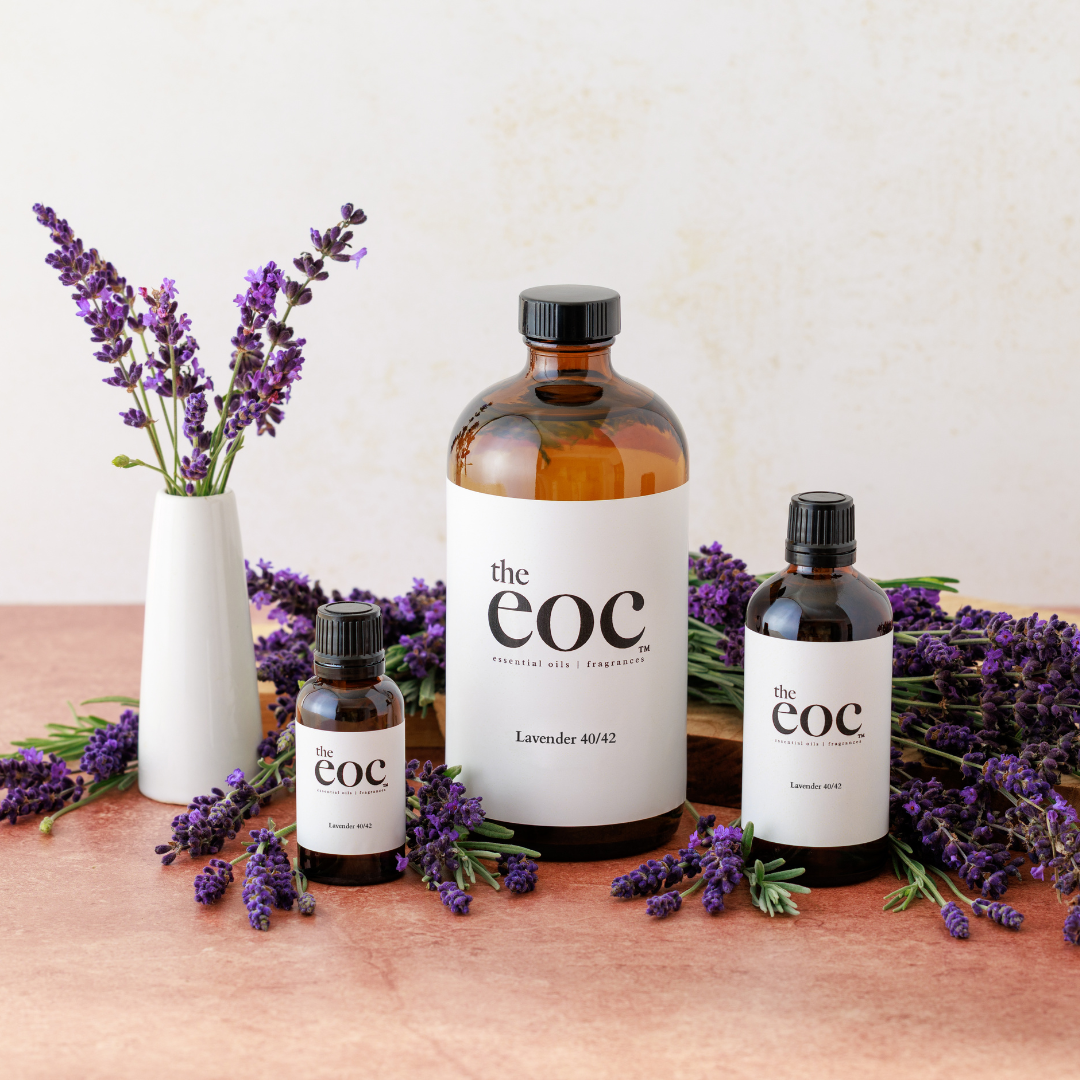


Lavender Essential Oil is extracted from the flowers of a perennial evergreen plant that has been in use for over 2500 years. Lavender can be found growing in the Mediterranean region, Europe, Africa, the Canary Islands, the Middle East, and India, where it thrives in dry, rocky, and sandy terrain. The word Lavender is believed to come from the Latin word “lavare,” which means “to wash,” as it has been used for cleansing purposes throughout history.
Lavender in the ancient world
Ancient Romans used Lavender to scent their baths, laundry, and bodies. Ancient Greeks referred to Lavender as “nardus”, after the city of Naarda in Syria, which was commonly called “Nard” at the time. Egyptians used Lavender for its scent during the mummification process as well as an ingredient in perfumery. Dioscorides, the Greek physician serving the Roman army, wrote about Lavender.

From herbals to wild harvest
John Parkinson, an English herbalist, wrote about Lavender in the 1500s. Charles VI of France was said to insist his pillows always contain Lavender.
Around the turn of the 20th century, Lavender was largely wild harvested from the hills in the north of the Mediterranean region, and the essential oil was distilled in small, mobile direct-fire stills. By the 1910s experimental Lavender farms began to appear in Southern France, but most Lavender used for essential oil distillation was still harvested from wild plants in the hills. This small-scale production of essential oil, harvested mostly from wildflowers and supplemented by small planted fields, remained the standard through the 1920s.
Decline and modern cultivation
A sharp decline in wild Lavender affected Southern France at the start of the 1930s, leading to a much lower yield in the region. The industry continued to survive on very limited wild harvest and struggling small plantations through the 1930s, reaching its lowest point at the start of WWII. René-Maurice Gattefossé, a French chemist working during the 1930s, included Lavender in his book, Aromathérapie.
Following the Second World War, more successful Lavender cultivation operations began to appear in the traditional growing regions of Europe. Improvements in planting and cultivation knowledge made yield from these new plantations more reliable, while advances in quality testing and chemical analyses placed greater emphasis on consistent practices and large-scale distillation.