
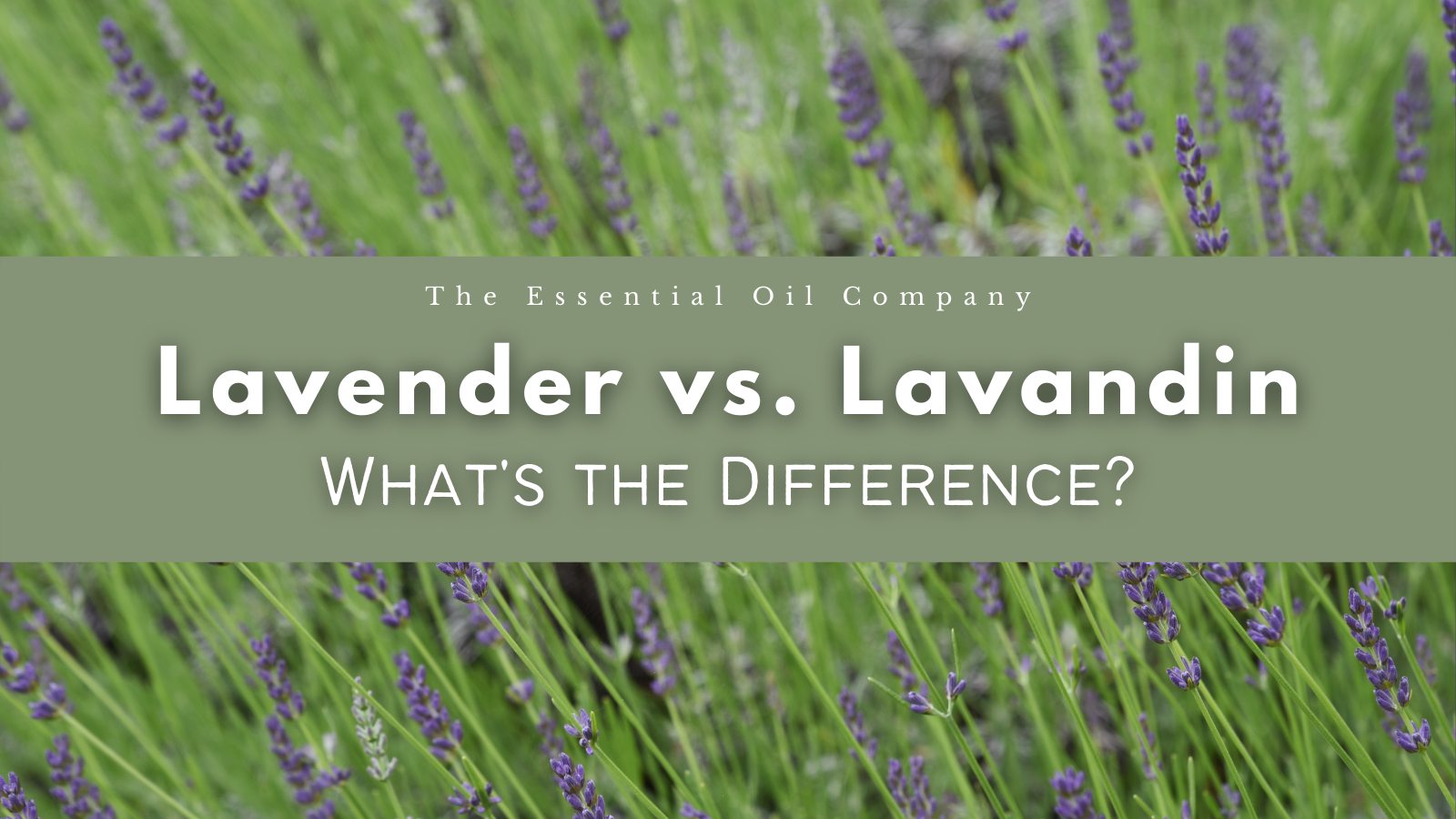
Lavender may be the single most popular essential oil, and it is likely one of the first oils we add to our collection. It becomes a favorite for many because of its versatility and its unique and pleasing aroma. Like many other essential oils, there are many varieties in the lavender family, each suited to different uses. There are over 40 different species of lavender in the genus Lavandula, but only a few of these species are used for essential oil production. One of them, known as Lavandin, is a hybrid that differs in some ways from the non-hybrid lavender that may be more familiar to us. To highlight the differences, we will compare Lavandin with the most popular lavender variety used for essential oils, True Lavender (Lavandula angustifolia).
Lavandin

Lavandin (Lavandula hybrida) is a hybrid species of lavender resulting from the cross between Lavandula angustifolia and Lavandula latifolia, species we know as True Lavender and Spike Lavender. Lavandin plants were a naturally formed hybrid that came from insects carrying pollen from higher altitudes, where True Lavender grows, to the lower altitudes, where Spike Lavender is typically grown. Once the qualities of this cross were discovered, the cultivation of Lavandin became commercialized.
Being a hybrid means that Lavandin has characteristics that come from both of the species that make it. The plant itself typically has longer stems than True Lavender, reaching over 24 inches. It also has a more spike-shaped flower head with grayish purple buds. While the aroma of Lavandin is similarly sweet and floral to that of True Lavender, it has a more intense camphorous and herbaceous quality. It is generally more suited to fragrance applications and is popular in soap making, cleaning products, and air fresheners. We carry Certified Organic Lavandin Grosso.
True Lavender

True Lavender (Lavandula angustifolia) is arguably the most popular of the lavender species that are commonly used for essential oil production. This species is native to Mediterranean countries such as Spain, Italy, Croatia, and France. It is sometimes called High Altitude Lavender because of the locations in which it is cultivated. The altitude at which lavender plants are grown can affect the percentage of esters, such as linalyl acetate, that the oil contains.
True Lavender has stems that reach around 24 inches long with flowers that range from pinkish to dark blue-purple in color. The plant is also used as a flavoring and is especially popular in pastries and desserts. The aroma of True Lavender is highly regarded in perfumery, soap, and body care products.
Recipes with Lavender and Lavandin

Lavender Chamomile Diffuser Blend
Ingredients
- 5 parts Lavender Essential Oil
- 3 parts Chamomile Essential Oil
- 2 parts Ylang Ylang Essential Oil
Instructions
Add water to your diffuser up to the fill line. Add 0.5 mL of the essential oil blend. This diffuser blend recipe is formulated for a 200 ml ultrasonic diffuser. Adjust the amount according to the size and directions of your diffuser.

Lavender Herb Foaming Bath Salts
Ingredients
- 2 oz of Unscented Liquid Castile Soap
- 1/2 oz of Jojoba Oil
- 2 cups of Coarse Mineral Sea Salt
- 1 cup of Epsom Salt
- 1.5 mL of Lavender Essential Oil
- 1 mL of Clary Sage Essential Oil
- 1 mL of Rosemary Essential Oil
- 0.5 mL of Peppermint Essential Oil
Instructions
Add coarse sea salt and Epsom salt to a large bowl and mix thoroughly. Add castile soap, jojoba oil, and essential oils to a small bowl and stir together until well combined. Add the liquid mixture to the salts and stir thoroughly until the mixture is fully incorporated and the salt seems to be evenly coated. Scoop into airtight containers for storage.
Directions
Add about ½ cup to a warm bath and stir to dissolve.

Lavandin Citrus Diffuser Blend
Ingredients
- 2 parts Lavandin Essential Oil
- 1 part Frankincense Essential Oil
- 1 part Grapefruit Essential Oil
- 1 part Sweet Basil Essential Oil
Instructions
Add water to your diffuser up to the fill line. Add 0.5 mL of the essential oil blend. This diffuser blend recipe is formulated for a 200 ml ultrasonic diffuser. Adjust the amount according to the size and directions of your diffuser.
Renew and Refresh Deodorizing Room Spray
Ingredients
- 4 oz Amber Glass Bottle with Spray Top
- 2 oz of High Percentage Alcohol
- 2 oz of Distilled Water
- 1 mL of Lavandin Essential Oil
- 1 mL of Lemon Essential Oil
- 1 mL of Tea Tree Essential Oil
Instructions
Add essential oils and alcohol to the 4 oz glass bottle. Fill the rest of the bottle up with distilled water. Attach the spray top and shake until all the ingredients are well combined. Spray on soft surfaces in the home to deodorize and refresh the scent.