
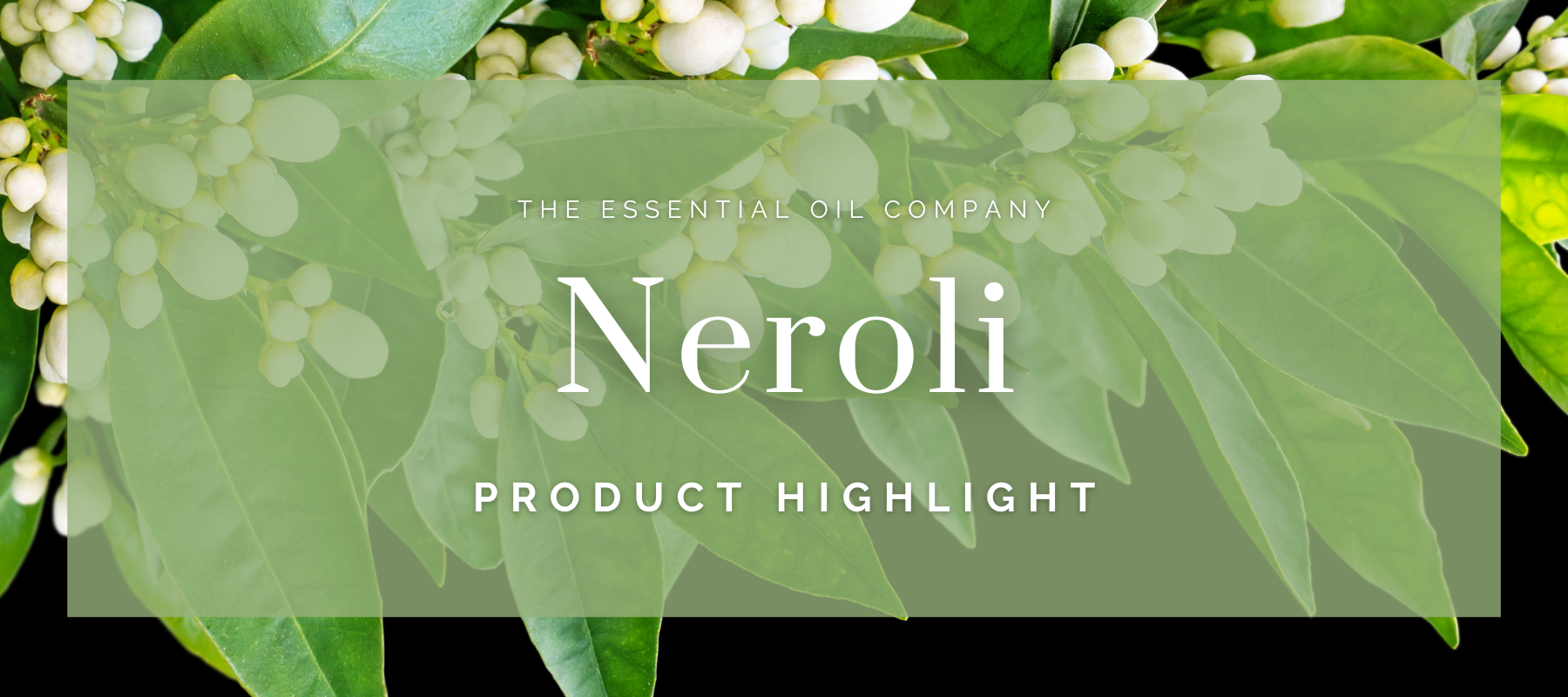
Neroli Essential Oil is extracted from the flowers of the Bitter Orange (Citrus bigaradia), an evergreen tree in the Rutaceae family. The oil is thin and clear, with an exotic, sweet floral aroma.
The tree
The Bitter Orange is thought to be a cross between the mandarin orange (Citrus reticulata) and the pomelo (Citrus maxima). It is native to Southeast Asia and has been naturalized in many other tropical and subtropical climates. The trees can grow up to thirty feet tall and have a wide, shrub-like appearance when not pruned. The bark is smooth and brown and studded with small thorns. The leaves are a rich green, long and oval, with oil glands dotted over the surface. The flowers are large and white with elongated petals and grow in small clusters. They are highly fragrant and form mainly in early summer, though they can appear through the whole year. The fruits are small and round, with a thick peel that shifts from green to bright orange as it ripens, and a juicy pulp that is extremely sour and bitter.
History
In Ancient China, Neroli flowers were thought to symbolize purity and fertility and were often used in bridal bouquets. From this tradition came the expression "to gather orange blossoms", which meant seeking a wife. In ancient Egypt, priests and priestesses used the oil for anointing during rituals, and the flowers were used in incense.
The Bitter Orange spread from Southeast Asia through India and into the Middle East as early as 700 CE. Genoese travelers brought the fruit to Europe, and the trees reached Spain with the Moors in the tenth century. Over the years the tree became an emblem of Seville and of Andalusia as a whole, which is why it is also called the Seville orange. Spain introduced the Bitter Orange to Florida, islands in the Caribbean and parts of South America, where it escaped cultivation and now grows near small streams in wooded areas.
The name Neroli comes from Nerola, a town near Rome. In the seventeenth century Anne Marie Orsini, a French princess, was Duchess of Bracciano and Princess of Nerola. She fell in love with the scent of the blossoms in spring and began using the oil to fragrance her baths, clothing and gloves. The scent quickly became fashionable and took its place in perfumery.
How Neroli oil is made
Flowers for essential oil are harvested between late April and early June, when the blossoms are just beginning to open. They are picked by hand on warm, sunny days to ensure maximum oil yield. The oil is extracted from the flowers by hydrodistillation. One kilogram of flowers generally yields around one gram of Neroli Essential Oil.
Neroli in perfumery
The unique aroma of Neroli Essential Oil makes it a widely loved ingredient in perfumery. It is often present in high-end floral blends and blends well with citrus elements, woody notes and other florals.
Recipes with Neroli Essential Oil
Neroli, Rose and Jasmine Diffuser Blend
- 3 parts Neroli Essential Oil
- 3 parts Rose Essential Oil
- 3 parts Jasmine Absolute
Add water to your diffuser up to the fill line, then add the blend. The recipe is sized for a 200 mL ultrasonic diffuser, where it comes to about 0.45 mL of essential oil in total. Adjust the amount to the size and directions of your diffuser.

Fruit & Flora Perfume Mist
- 8 oz Amber Glass Bottle with Spray Top
- 3 oz of Distilled Water
- 4 oz of High Percentage Alcohol
- 5 mL of Vegetable Glycerin
- 5 mL of Fractionated Coconut Oil
- 0.5 mL of Neroli Essential Oil
- 0.5 mL of Grapefruit Essential Oil
- 0.5 mL of Bergamot Essential Oil
- 0.25 mL of Ylang Ylang Essential Oil
Add all ingredients to the bottle and shake well to combine. Spritz over your body for a floral and citrus scent. Shake before each use.
Find Neroli Essential Oil in our essential oils collection.