

Some ingredients do more than smell beautiful. They tell you something about where they came from, how they were handled, and whether care was taken at every step.
Our Douglas-fir essential oil is one of those ingredients.

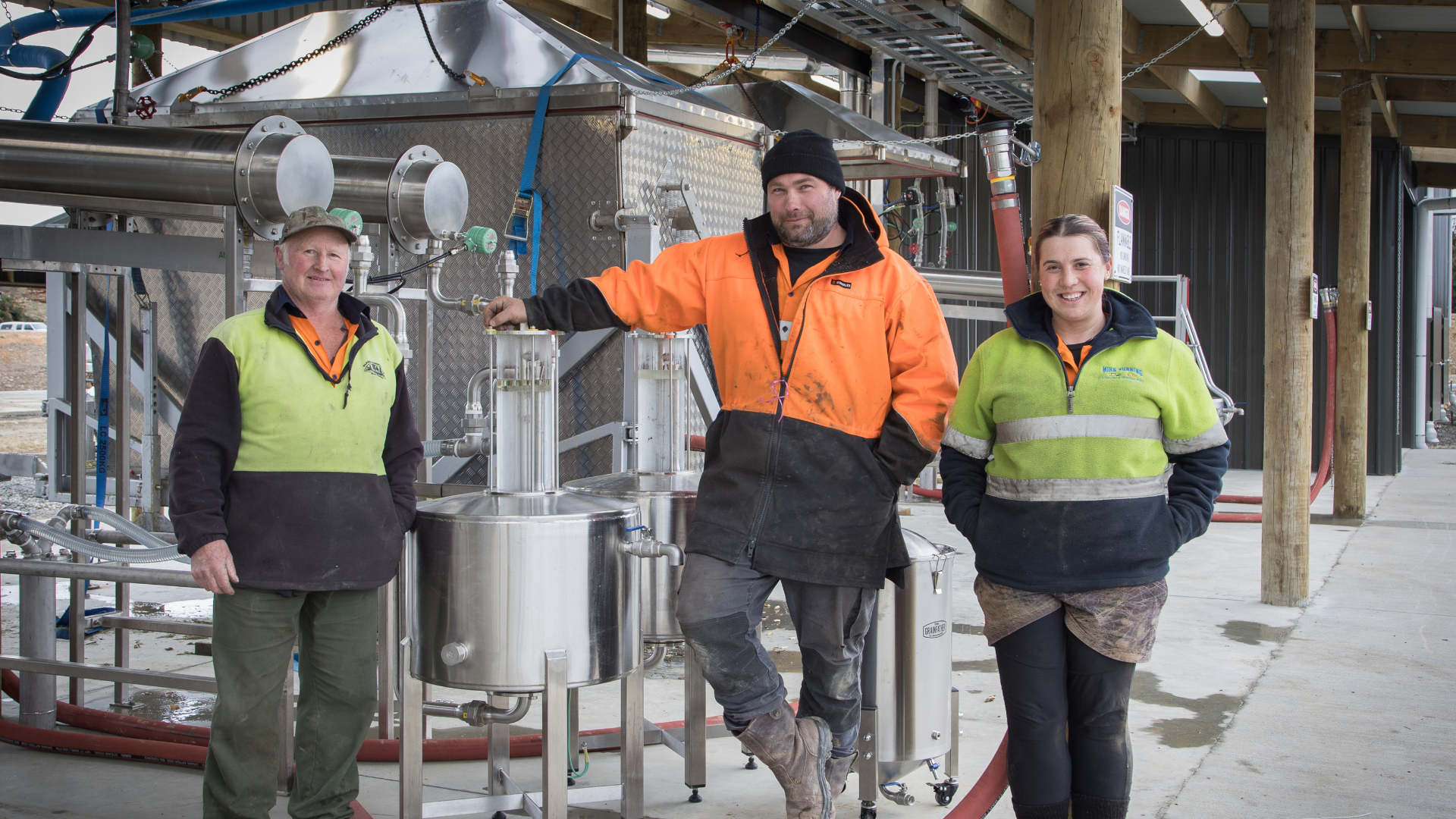
Photos courtesy of Port Blakely
Fresh, green, softly resinous, and surprisingly nuanced, Douglas-fir brings a rare kind of versatility to essential oil blends and fine fragrance alike. But for us, its appeal goes beyond aroma alone. We chose to source our Douglas-fir essential oil from Port Blakely because their process offers something we value deeply: transparency from forest to finished oil.
A Different Kind of Conifer

Despite its name, Douglas-fir is not actually a true fir. It belongs to the Pseudotsuga genus rather than the Abies genus, which helps explain why its aroma feels so distinct from many typical conifer oils. Instead of the sharper, harsher profile often associated with commodity pine or fir needle oils, Douglas-fir offers brightness, softness, and complexity with citrus lift, green freshness, a subtle floral quality, and a smooth woody finish.
That unusual profile is one reason Douglas-fir is becoming increasingly interesting to formulators and perfumers. In fine fragrance, it can move between top and middle note roles, pairing naturally with citrus, woods, spices, florals, musks, and modern amber materials. It has a rare ability to bring clarity at the opening of a composition while also helping bridge the heart and base.
Sourced From Living Trees, Not Leftover Waste

One of the biggest reasons we chose Port Blakely is the way they source their biomass.
Unlike many conifer oils that are produced from forestry waste after clearcutting — where branches may sit for days or even weeks before distillation — Port Blakely harvests needles and twigs directly from living trees dedicated to oil production. Those trees remain in the ground, continuing to grow and act as long-term carbon sinks, while only the green material needed for distillation is selectively harvested.
That matters because freshness matters. When conifer biomass sits too long before distillation, the plant material begins to degrade, which can create dullness or sharp off-notes in the finished oil. Port Blakely’s model is designed to preserve the bright, clean, forest-fresh character that makes Douglas-fir so special in the first place.
Tree to Oil in Four Hours

Port Blakely describes their process simply: tree to oil in four hours.
Freshly harvested needles and twigs are selected, trimmed, chipped, and distilled onsite within just a few hours. The oil is steam distilled from specially farmed Douglas-fir trees using pure spring water from their own source in New Zealand’s Southern Alps region. Combined with tightly controlled temperatures and pressures during distillation, that speed and consistency help produce an oil that feels exceptionally vivid, polished, and true to the living tree.
This is also part of why Douglas-fir is priced differently from typical commodity conifer oils. Yield is very low — around 0.2%, often up to ten times lower than more common conifer oils — so creating a high-quality oil requires both careful raw material management and a highly controlled process.
Built for Consistency and Scale

Transparency is not just about where something comes from. It is also about whether a supplier can explain how they maintain quality over time.
According to Port Blakely, the trees used for Douglas-fir oil are specially grown and pruned on rotation so the input material maintains consistent genetics, age, and growing conditions. Their distillery was custom-built within a 4,000-hectare forest, and the entire production chain is owned in-house. That kind of vertical integration supports both batch consistency and long-term supply security. Current production is reported at around one ton per month, with significant room for expansion.
For us, that level of control matters.
The People Behind the Process

Supplier stories are never only about land or machinery. They are also about the people doing the work.
Port Blakely has been operating as a forestry company for more than 160 years in the USA and, more recently, New Zealand. That long view shows up not only in the forest management model, but in the way the business has invested in building a dedicated distillation operation around Douglas-fir rather than treating it as an afterthought or side stream.

The result is an oil that feels intentional at every stage: from how the trees are grown, to how the biomass is handled, to how the finished material performs in fragrance, personal care, and aromatherapy applications.
Why We Chose This Douglas-fir

We chose Port Blakely’s Douglas-fir essential oil because it reflects the kind of sourcing we want to stand behind: thoughtful cultivation, selective harvesting, fast onsite distillation, and a supply chain that can be clearly explained.
It is a beautiful oil on its own. It’s fresh, green, citrus-tinted, and quietly elegant. But what makes it especially meaningful to us is the story behind it: living trees, controlled production, and a genuine effort to preserve the integrity of the material from forest to formula.
That is why we are proud to source our Douglas-fir essential oil from Port Blakely.