
We managed to locate an excellent source for wild crafted aromatic raw materials.
This is very exciting to me, as it opens a door for access to some very interesting plants, some of which I've wanted to distill for a very long time. Included in that list is:
Wild Ginger (Asarum canadense), Arrowleaf Balsamroot (Balsamorhiza sagittata), Pipsissewa or Prince's Pine (Chimaphila umbellata) and of course one of my favorites, Incense Cedar (Libocedrus decurrens, also known as Calocedrus decurrens).
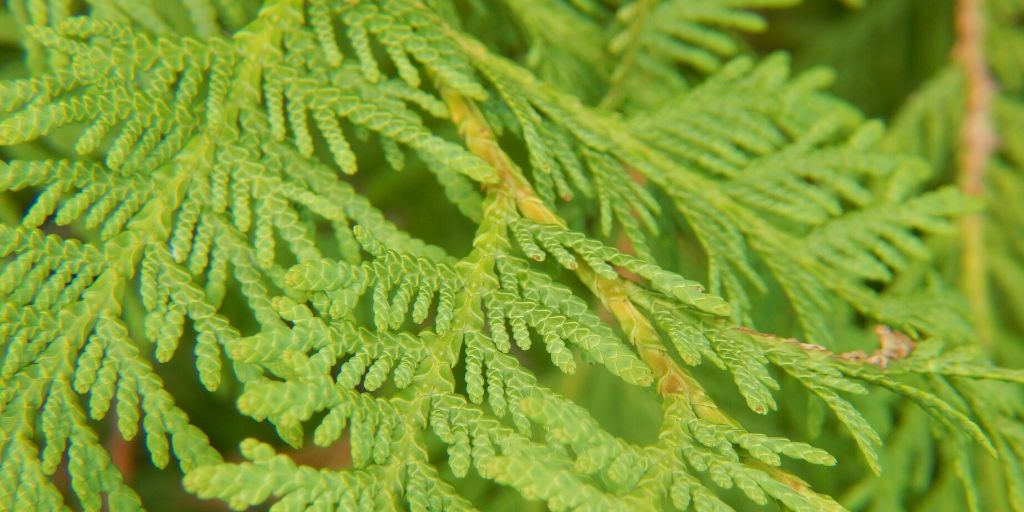
A first batch of Incense Cedar leaf
The leaf we obtained had been gently dried and there was minimal stem material. The needles had been shaken off the branches after drying. This is very good, because the twigs are unproductive and take up room in the still and add to our costs for energy production (steam).
I distilled for three hours and obtained less than 0.5% yield. Then it dawned on me that I had made an error.
As with all conifers, the scales of the "leaf" of the Incense Cedar are covered with a waxy coating.
In order to break through the coating and get at the essential oils it protects, I turned off my distiller and left the steam soaked plant material to sit overnight.
When I distilled the next morning, the essential oil flowed easily. I finally ended up with a 1.4% yield of essential oil and lots of interesting hydrosols.
When I do my next run of Incense Cedar Leaf, I will add copper to the system to reduce the sulfurous "still note".
The last time I distilled Incense Cedar was in a copper still and the oil was "sweet" right from the beginning. I will also soak each batch for at least 12 hours prior to distillation.
After distillation the oil and waters are left to breathe, like a fine wine. The top of the container is open, with a gauze covering it. This lets the essential oil "breathe" and ensures that nothing accidentally enters the container.
I hope in the future to be able to increase the percent yield to between 1.5% and 2.0%.
Wild Ginger and Arrowleaf Balsamroot are next.