
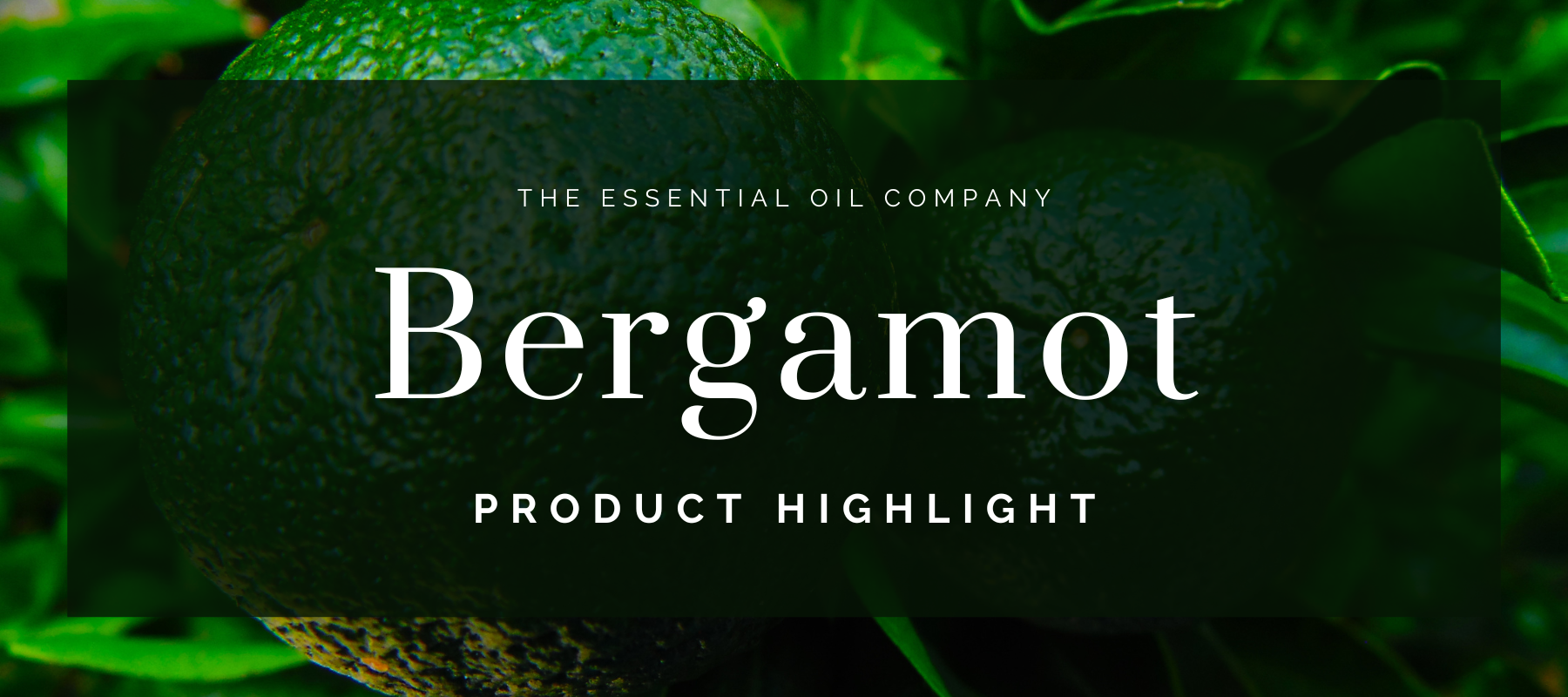
Bergamot essential oil is cold pressed from the peel of Citrus bergamia, a citrus fruit grown mostly in southern Italy. Its aroma is sweet and fresh like other citrus oils, with a spicy undertone that sets it apart.
Plant details
Bergamot (Citrus bergamia) is cultivated for essential oil production. It is commonly grown by grafting bergamot branches onto bitter orange trees. About three years after grafting, the branches begin to produce fruit. The flower is a small, delicate white blossom that opens in late winter. By summer it develops into a small, wrinkled, slightly pear-shaped fruit that turns from green to yellowish as it ripens.
The trees reach full maturity after 12 years, when each one bears hundreds of fruits a season. At that peak a tree can produce enough fruit to yield over 2 pounds of essential oil, and it will keep bearing for up to 70 years.
History
The name bergamot is thought to come from the city of Bergamo, Italy, where the essential oil was first widely sold. Southern Italy is where most bergamot is grown and pressed today. It is also grown in Southeast Asia, South America and Africa.
Bergamot has long been used as a flavoring. The dried peel and the essential oil are what was added to black tea to create Earl Grey. In perfumery, bergamot has been used in perfumes and colognes since the eighteenth century. It was one of the ingredients in the original Eau de Cologne, a perfume popular with eighteenth-century royalty and one of the oldest fragrances still produced today.

Extraction and aroma
Bergamot essential oil is cold pressed from the peel of the fruit when it is nearly ripe. Today the pressing is done with specialized machinery. Until the middle of the nineteenth century this laborious work was done by hand. It takes approximately 30 to 40 fruits to yield one ounce of essential oil.
The oil is very low in viscosity and ranges in color from yellow to green. The scent is fresh and sweet, similar to other citrus oils, with a spicy undertone of its own.
Cold pressed bergamot oil contains bergaptene, which is phototoxic. In anything that stays on the skin it is used only at a very low level.
How makers use bergamot
Bergamot is a popular perfumery material, and that includes handcrafted perfumes. Its citrus scent also suits soap, shampoo bars and natural deodorant. In the recipes below it is blended with grapefruit in a shampoo bar, and with lime, frankincense and sandalwood in a solid perfume, where the bright, verdant citrus oils contrast the deeper scent of the wood oils.
Recipes

Bergamot Solid Shampoo
Ingredients
- 9 ounces Coconut Oil
- 9 ounces Palm Oil
- 8 ounces Castor Oil
- 10 ounces Distilled Water
- 5 ounces Sodium Hydroxide Lye
- 1.5 ounces Bergamot Essential Oil
- 0.5 ounce Grapefruit Essential Oil
Supplies
- Heat safe soap mold
- Immersion blender
- Digital kitchen scale
- Small bowl for essential oils
- Glass bowl for lye mixture
- Large glass or stainless steel bowl for oils
- Pot or double boiler
- Spoon or rubber spatula
- Gloves
- Safety glasses or goggles
Instructions
Wear safety glasses or goggles, gloves and long sleeves. Working with lye and high temperatures requires caution and safe practices. Always make soap in a well-ventilated area.
- Measure and combine your essential oils and set aside.
- Weigh each oil and combine in a large bowl. Place the bowl on top of a large pot that is about 1/3 full of water and bring the water to a boil. Heat the oils until fully melted and incorporated, stirring occasionally.
- While the oils are melting, weigh out the lye and water in two separate bowls. Slowly add the lye to the water while gently stirring until the lye is fully dissolved and the liquid is clear.
- Let the oils and the lye mixture both cool to 130 degrees or below, making sure they are within 10 degrees of each other.
- Place your immersion blender into the oils, tapping it on the bottom of the bowl to release any air bubbles. This is a safety precaution that keeps bubbles from coming to the surface when you begin mixing in the lye.
- Slowly and gently pour the lye water into the oil mixture. You can pour down the side of the bowl or down the shaft of the immersion blender to reduce the chance of splashing.
- Pulse the blender a few times, watching as the oils and lye start to combine. Switch between short pulses and stirring with the blender until the mixture comes together to a very light trace. This allows time to add fragrance without the soap becoming too thick to work with.
- Working quickly, stir (do not blend) in the essential oil blend.
- Once the soap reaches about a medium trace, pour it into your mold or molds, scraping the bowl so no soap is left behind. Tap the molds on your table or counter to release any trapped air bubbles.
- Allow the soap to sit in the molds for 48 to 72 hours at room temperature. Unmold the soap, cut into bars if using a loaf mold, and allow to cure for 4 to 6 weeks.

Bergamot Solid Perfume
Ingredients
- 30 mL Sweet Almond Oil
- 30 mL Beeswax Pearls
- Small metal tins
- 0.5 mL Bergamot Essential Oil
- 0.5 mL Lime Essential Oil
- 0.25 mL Frankincense Essential Oil
- 0.25 mL Sandalwood Essential Oil
Instructions
- Place the sweet almond oil and beeswax pearls in a glass bowl. Set the bowl on top of a saucepan partially filled with water over medium heat and allow the beeswax to fully melt.
- Remove the bowl from the heat and stir, allowing it to cool for a moment. Add the essential oils and stir again.
- Pour the liquid into airtight containers. Small metal tins are a good choice for travel or as a gift.
- Place the lid on the container and allow the perfume to fully harden for approximately 30 to 45 minutes before use.
To use
Rub a clean finger across the top of the perfume and dab on the wrists and nape of the neck. Reapply as needed.
Find the oil used in these recipes here: Bergamot essential oil.