
Knowledge Hub


How to Follow the “Memory Study” Scent Routine at Home
A step-by-step guide using our Memory Essential Oil Sets & Aroma Infinity Diffuser
Learn more
IFRA for Beginners: How We Keep Your Favorite Scents Safe to Use
New to IFRA? This simple guide explains basic fragrance safety, usage limits, and how to choose oils for candles, soap, body care, perfumes, and home fragrance.
Learn more
What Counts as a “Natural” Fragrance? A Closer Look
At The Essential Oil Company, we’ve always celebrated the art and science of scent. For decades, we’ve sourced pure essential oils from trusted farms around the world—and now, we bring that same integrity to every fragrance we craft. A question we often hear is: “Is your fragrance 100% natural?” Yes, but often the answer depends on how you define natural. And that’s exactly where the conversation gets interesting. 1. Fragrance Is a Formula, Not a Single Ingredient A fragrance isn’t a single oil or extract. It’s a carefully balanced blend of multiple components: aroma materials (natural or lab-crafted), solvents, stabilizers, and fixatives. Even essential oils need to be diluted or stabilized before they can be used in perfumes, soaps, or candles. Once that happens, it’s technically no longer “100% natural” because it becomes a formula. In short: fragrance is always a blend, not just one extract. 2. Defining “Natural”: ISO Standards and Global Perspectives Here’s where the confusion often begins. While the U.S. doesn’t have a legal definition for “natural fragrance,” the International Organization for Standardization (ISO) provides globally recognized criteria for what qualifies as natural or naturally derived. According to ISO standards, a fragrance can be considered 100% natural if all its ingredients come directly from plant, animal, or microbial sources through physical, enzymatic, or microbiological processes without intentional chemical alteration. At The Essential Oil Company, our Natural Fragrance Line meets those standards. Every material used is of natural origin, and every formula is certified accordingly. However, not all brands follow ISO definitions. Many develop their own internal criteria for “natural,” which is why consumers often see inconsistent or misleading labels. This is also where greenwashing comes in—when a brand markets a product as “natural” even if it contains mostly synthetic ingredients. The lack of a universal legal definition makes it easy for this confusion to spread. 3. Why Not All Fragrances Are Natural (And That’s Okay) Some fragrances (especially those inspired by flowers like lilac, peony, or violet) can’t be extracted directly from the plant. Their aromatic compounds are too delicate or unstable to capture naturally. To recreate these scents, perfumers use nature-identical molecules: lab-crafted versions that replicate what exists in nature without being derived from it. These ingredients allow us to enjoy the full range of olfactory experiences while protecting the planet and ensuring consistency. Other materials, such as musk or ambergris, are no longer sourced naturally due to ethical or environmental concerns. Science helps fill those gaps responsibly. 4. Safety First: IFRA and FDA Standards Both natural and non-natural fragrance ingredients are subject to safety standards set by organizations like the International Fragrance Association (IFRA) and monitored by the FDA. Some natural oils (especially citrus and spice) can be irritating or phototoxic at higher concentrations. Likewise, many synthetic materials are also regulated for safe use.That’s why our fragrances are formulated by expert labs that follow strict IFRA and ISO compliance to ensure balance, performance, and responsible use of all ingredients. 5. Understanding the Spectrum: Natural, Naturally Derived, and Synthetic Fragrance exists on a spectrum: Natural: All ingredients come directly from nature (as defined by ISO standards). Naturally Derived: Ingredients begin in nature but are modified for performance or safety. Safe-Synthetic: Ingredients are fully lab-created, often used to replicate scents that can’t be extracted naturally. Each type offers unique benefits, and none is inherently “better.” The goal is understanding what you’re buying—and choosing what aligns with your values and needs. The Safe Science Advantage When you choose a fragrance from The Essential Oil Company, you’re choosing formulas crafted with the same care we bring to our essential oils, with a little help from modern science. Our fragrances are: Consistent: stable and long-lasting, batch after batch Ethical: free from animal-derived and wasteful materials Beautiful: crafted to perform in soaps, candles, diffusers, and beyond We call it “Nature, Perfected.” It’s how we honor the essence of the earth while creating fragrances built to last in the modern world. Rooted in Nature, Elevated by Innovation The Essential Oil Company began with farms and fields. Today, our story continues with science, applied responsibly and transparently, and always in service of the same mission: To connect people to scent in its purest, safest, and most beautiful form. Because true sustainability isn’t about being “all natural.” It’s about being all thoughtful.
Learn more
Spearmint: Product Highlight
Plant Details Spearmint (Mentha spicata), also referred to as garden mint, lamb mint, and common mint, is a perennial herb in the Lamiaceae family. It is native to areas across Europe and Asia and has become naturalized in temperate regions of North America, South America, the Mediterranean, and southern Africa. Spearmint grows from twelve to forty inches tall and has square stems characteristic of the minty family which can be smooth or have fine hairs. Spearmint leaves are bright green and oblong, narrowing to a pointed tip. The name ‘spearmint’ derives from the pointed leaf tips which resemble spearheads. Spearmint leaves are generally two to three and a half inches long and a half inch to one inch broad, with serrated edges. The flowers of the Spearmint plants bloom in summer, growing in clusters on slender, two to four inch spikes. The flowers are small, only a few millimeters across, and can range in color from white to light pink or purple. Spearmint can grow in conditions from shade to full sun but flourishes in partial shade with moist and adequately draining soil. History The common name ‘Spearmint’ comes from the spear-like shape of the plant's leaves while the scientific name ‘spicata’ means “bearing a spike” which refers to the plant's flower spikes. Spearmint has been used for centuries for its digestive benefits and it was often served alongside or after meals to combat stomach upset, nausea, gas, and bloating. The herb was also used in Ayurvedic medicine for the same purpose as well as being utilized to help soothe skin issues and to ease the pain of headaches. Spearmint has been described in history as early as the first century CE, with mentions of the herb in the Christian bible and other ancient mythological texts. Swedish biologist Carl Linnaeus was the first to scientifically describe the Spearmint species in the eighteenth century. Early versions of toothpaste from the fourteenth-century feature mint flavoring, suggesting widespread domestication of Spearmint had been established by that time. In Greece, Spearmint was used to scent bath water and was seen as an aphrodisiac. Spearmint was brought to England by Romans in the fifth century and there its medicinal properties finally became more well-known. It began to be used to relieve nausea, vomiting, and other stomach upsets as well as being utilized to soothe respiratory issues, including symptoms of the common cold. William Turner, a botanist known as the "Father of British Botany" mentions Spearmint as being good for stomach ailments. English herbalist John Gerard writes of Spearmint in his 1597 Herbal, stating that it is “ good against watering eyes and all manner of break outs on the head and sores.” and that "They lay it on the stinging of wasps and bees with good success." Of the aroma of Spearmint Gerard says "the smell rejoices the heart of man", for which reason they used to strew it in chambers and places … where feasts and banquets are made." During the American Revolution, Spearmint is documented as an important cash crop in Connecticut. Mint tea was a popular drink during this time due to it not being taxed like other teas. Extraction Spearmint is harvested just before the plant begins flowering or just as the flowers begin to open when the essential oil content is at its maximum. Plants can be harvested two to three times each season in good growing conditions. Harvest ideally takes place in the morning on a sunny and dry day before the Spearmint plants begin to wilt in the sunny. Spearmint plants are cut one to inches above ground level, either by hand with shears or mechanically with hay mowers or sickle bar mowers. After cutting, the plant material is gathered in bunches. Some producers will then load the fresh Spearmint into machinery to be chopped and then transfer it to a mobile still to be distilled in the field. In other instances, the Spearmint will be placed in a warm shaded area to dry for a day before being transported to the distillation facility. Spearmint Essential Oil is extracted from the leaves and flowering tops of the plant through steam distillation. The resulting essential oil is thin and colorless to pale yellow in color, with a fresh, sweet, and herbaceous minty aroma. Benefits & Uses When used in aromatherapy, the refreshing and invigorating aroma of Spearmint Essential Oil is known as a beacon of rejuvenation. It has been found to soothe feelings of stress and anxiety, offering respite from mental fatigue and tension. Spearmint is believed to evoke a sense of clarity and tranquility, promoting relaxation and overall well-being. It is known to relax the brain and body, helping to relieve headaches, reduce symptoms of illness, and ease feelings of negativity. Spearmint Essential Oil has been found to enhance concentration and memory retention when diffused during work or study, and its revitalizing properties may help uplift the mood and bring emotions into balance. Diluted and used topically, Spearmint Essential Oil is thought to possess cleansing and anti-inflammatory properties, making it a formidable force against skin concerns. It has been found to combat acne, reduce redness, and soothe blemishes. The cooling sensation of Spearmint Essential Oil may help ease discomfort in irritated skin and leave the skin feeling refreshed and revitalized. Antioxidant properties may make Spearmint useful in reducing the appearance of wrinkles and skin imperfections, including discoloration, promoting a more youthful complexion. Spearmint Essential Oil is believed to support healthy skin cell regeneration, enhancing skin resilience and improving elasticity over time. It is also thought to serve as an ideal skin cleanser, helping to unclog pores and imparting a cooling sensation that relieves itching associated with dryness and leaves the skin feeling cool and refreshed. Spearmint is believed to provide relief from aches, pains, and muscle spasms while also working to alleviate fever, fatigue, inflammation, and other symptoms of illness. Spearmint Essential Oil is known to support healthy digestive functions and has been recognized for easing the discomfort of menstrual issues like abdominal pain and cramping. Spearmint Essential Oil may assist in treating Varroa mites when used in the keeping of honeybees. It may also be used to mask scents while not mimicking any of the honeybee’s pheromones, working to deter predator species and protect the hive. Spearmint is often used in combination with lemon grass oil during feeding to help improve overall hive health. Here are some recipes using Spearmint Essential Oil that we love... Breath of Fresh Air Diffuser Blend 3 drops of Spearmint Essential Oil 3 drops of Peppermint Essential Oil 2 drops of Eucalyptus Essential Oil 2 drops of Lavender Essential Oil Diffuser Instructions Add water to the diffuser up to the fill line. Add drops of the essential oil blend. This diffuser blend recipe is formulated for a 200ml ultrasonic diffuser. Adjust the amount according to the size and directions of the diffuser. Minty Blossom Calming Facial Toner Ingredients 4oz Amber Glass Bottle 2 oz of Witch Hazel Extract 1 oz of Distilled Water ½ oz of Sweet Almond Oil 20 drops of Spearmint Essential Oil 20 drops of Geranium Essential Oil 10 drops of Chamomile Essential Oil Instructions Mix all ingredients in a 4 oz glass amber bottle and shake well to combine. To use, soak a cotton round with the toner and then gently rub it over the face and neck. Shake well before each use. Store in a cool dark place for extended shelf life. Beacon of Rejuvenation Uplifting Room Spray Ingredients 4 oz Amber Glass Bottle with Spray Top 2 oz of High Percentage Alcohol 2 oz of Witch Hazel Extract 30 drops of Spearmint Essential Oil 20 drops of Grapefruit Essential Oil 20 drops of Rosemary Essential Oil 10 drops of Bergamot Essential Oil Instructions Add 2 oz of high-percentage alcohol to the bottle. Add the essential oils and fill the remainder of the bottle with witch hazel, leaving a little space at the top. Shake well before each use. Spray all around the home. Cool & Calm Massage Oil Ingredients 4oz Amber Glass Bottle 2oz of Fractionated Coconut Oil 1oz of Sweet Almond Oil 1/2oz of Jojoba Oil 20 drops of Spearmint Essential Oil 20 drops of Lavender Essential Oil 10 drops of Black Pepper Essential Oil Instructions Add all ingredients to a 4-ounce amber glass bottle and shake vigorously to combine. Pour a small amount into the hands and gently massage into the desired area. Healthy Hive Beekeeping Essential Oil Syrup Ingredients: 5 cups of Water 2 ½ pounds of Sugar 1/8 teaspoon of Lecithin Granules 15 drops of Spearmint Essential Oil 15 drops of Lemongrass Essential Oil Instructions Bring the water to a boil and add the sugar, stirring until the sugar is completely dissolved. Remove it from heat and quickly add lecithin and essential oils. Stir the mixture until everything is combined. The mixture can also be added to a blender as the lecithin granules can sometimes be difficult to incorporate. Cool completely before use. Do not leave the mixture open around bees. To use, add 1 teaspoon per quart of 1:1 sugar syrup to stimulate brood rearing, pollen collection, and early spring development. Add 2 teaspoons per quart of 1:1 sugar syrup to improve health or to help against cases of dysentery, chalkbrood, and other stress problems. Add 4 teaspoons per quart of 1:1 sugar syrup when introducing new queens. You will likely need to drizzle this over the bees, or they won’t eat it on their own. You may also enjoy... Nutmeg: Product Highlight Oregano: Product Highlight Courage Blend: Meet the Ingredients Essential Oils & Crystals: Carnelian
Learn more
Oregano: Product Highlight
Plant Details Oregano (Origanum vulgare) is a species of perennial flowering herb in the Lamiaceae family. It is native to areas in Europe, the Mediterranean, and central Asia and has become naturalized in other temperate environments in the Northern Hemisphere. Oregano plants can grow between eight and thirty inches tall and spread around two feet wide with a dense, bushy appearance. The leaves of the plant are olive green in color and spade-shaped, growing from a half inch to an inch and a half long. Oregano leaves are highly aromatic and grow opposite along the square woody stems of the plant. Tiny flowers bloom in spike clusters during summer, rising above the foliage on long stems. The flowers of the Oregano plants are only three to four millimeters and have delicate petals, ranging from white to pink to purple in color. History The name Oregano developed from the Ancient Greek terms “oros” which means “mountain” and “ganos” meaning “joy” and together they mean “joy of the mountains.” Both the freshly picked leaves and essential oil of Oregano have been utilized by Ancient Greek physicians for medicinal purposes ranging from the treatment of wounds to the relief of common colds. Notable physicians Hippocrates and Maimonides were said to have prescribed it for its antiseptic and immune-boosting properties. According to Greek mythology, the goddess Aphrodite created Oregano to be a symbol of happiness and it was meant to make life happier for mankind. Influenced by this myth, Greek couples would place on Oregano on their heads during the wedding to deter evil spirits. The herb was also placed on the tombs of departed family members as it was believed that it brought them peace in the afterlife. Greece was later conquered by the Romans who began spreading Oregano throughout Europe and northern Africa. In these regions, the herb was used for flavoring fish, meat, and wine. During the Middle Ages, Oregano Essential Oil was used to help relieve toothaches, indigestion, and coughs. Oregano was traded along the Spice Route from the Middle East to China where doctors began prescribing the herb and essential oil for skin irritation, fever, and vomiting. Extraction Oregano that is cultivated for essential oil production is harvested from May to August when the oil concentration in the leaves is highest. After the plant material is harvested, it is dried by warm air convection before being transported for extraction. Oregano Essential Oil is extracted from the leaves of the plant through steam distillation. The resulting essential oil is thin and yellow in color, with a sweet, spicy, and herbaceous aroma. Approximately two hundred pounds of dry plant matter is required to produce thirty-two ounces of Oregano Essential Oil. Benefits & Uses Used in aromatherapy, Oregano Essential Oil is believed to support health and wellness by boosting the immune system and working to combat symptoms of illness. It has been found to break up phlegm to eliminate build-up in the lungs and alleviate congestion and sneezing. Oregano Essential Oil may help ease respiratory inflammation, working to soothe throat irritation and painful coughs. It is known to stimulate healthy immune function to help the body avoid becoming sick as often and to recover more quickly from illness when it happens. Oregano Essential Oil is thought to help regulate hormone levels which may work to balance the mood and support regular menstruation. It has been found to be calming to the body and mind, helping to encourage feelings of relaxation and promote faster sleep onset. When properly diluted and used topically, Oregano Essential Oil is known to reduce inflammation which can help to ease pain and support skin health. It has been found to neutralize itchiness and diminish redness from insect stings, rashes, and other skin irritations. Oregano Essential Oil may help to soothe aches and pains in muscles and joints while working to alleviate swelling caused by arthritis or injury. It is believed to inhibit the growth of bacteria, yeast, and fungi to help combat infection and illness. Oregano Essential Oil is thought to possess antioxidant properties that help combat signs of aging for a smooth and youthful complexion. It has been found to diminish acne and blemishes while working to brighten and tighten the skin. Oregano is known to soothe dry scalp and alleviate dandruff by moisturizing and conditioning the hair. Oregano Essential Oil is believed to cleanse the air and surfaces by eliminating bacteria and supporting immune health. It may help to repel insects such as ants and roaches while working to combat the growth of mold and fungus around the home. Here are some recipes using Oregano Essential Oil that we love... Wellness Boost Diffuser Blend Ingredients 3 drops of Oregano Essential Oil 3 drops of Peppermint Essential Oil 2 drops of Lavender Essential Oil 2 drops of Lemon Essential Oil Instructions Add water to the diffuser up to the fill line. Add drops of the essential oil blend. This diffuser blend recipe is formulated for a 200ml ultrasonic diffuser. Adjust the amount according to the size and directions of your diffuser. Peace of Mind Balancing Room Spray Ingredients 4 oz Amber Glass Bottle with Spray Top 2 oz of High Percentage Alcohol 2 oz of Distilled Water 10 drops of Oregano Essential Oil 10 drops of Lavender Essential Oil 10 drops of Sweet Orange Essential Oil 5 drops of Ylang Ylang Essential Oil Instructions Add 2 ounces of high-percentage alcohol to the bottle. Add the essential oils and fill the remainder of the bottle with water, leaving a little space at the top. Shake well before each use. Spray around the room in the morning. Soothe & Protect Healing Lotion Bar Ingredients Heat Safe Bar Molds 4 oz of Sweet Almond Oil 4 oz of Cocoa Butter Wafers 4 oz of Beeswax Pearls 10 drops of Oregano Essential Oil 10 drops of Chamomile Essential Oil 10 drops of Frankincense Essential Oil 10 drops of Lavender Essential Oil Instructions Combine Sweet Almond Oil, Cocoa Butter, and Beeswax in a heat-safe bowl and melt over a double boiler. Stir the ingredients continuously until they are fully melted and combined. Remove the mixture from the heat, and let it cool for a few minutes. Add the essential oils and then gently stir until they are completely integrated. Carefully pour the mixture into the molds and gently tap the molds on the work surface to release any air bubbles. Allow the lotion bars to cool and harden for several hours before removing them from the molds. Nourishing Hydration Moisturizing Oil Ingredients 2 oz Amber Bottle with Dropper 1 oz of Sweet Almond Oil 1 oz of Jojoba Oil 10 drops of Oregano Essential Oil 10 drops of Rosemary Essential Oil 8 drops of Geranium Essential Oil Instructions Add all ingredients to the bottle and give it a good shake to combine. Add a few drops to the hands and massage into the face, scalp, or body to soothe and hydrate skin. Plant Power Surface Cleansing Spray Ingredients 16oz Amber Glass Bottle with Spray Top 8 oz of White Vinegar 4 oz of Witch Hazel Extract 4 oz of Distilled Water 15 drops of Oregano Essential Oil 15 drops of Peppermint Essential Oil 10 drops of Tea Tree Essential Oil Instructions Combine all ingredients in the spray bottle and shake until thoroughly combined. Shake well before each use. Spray on surfaces around the home and wipe with a clean cloth. You may also enjoy... Cinnamon: Product Highlight Citronella: Product Highlight Digest Comfort Blend: Meet the Ingredients Immune Health Blend: Meet the Ingredients
Learn more
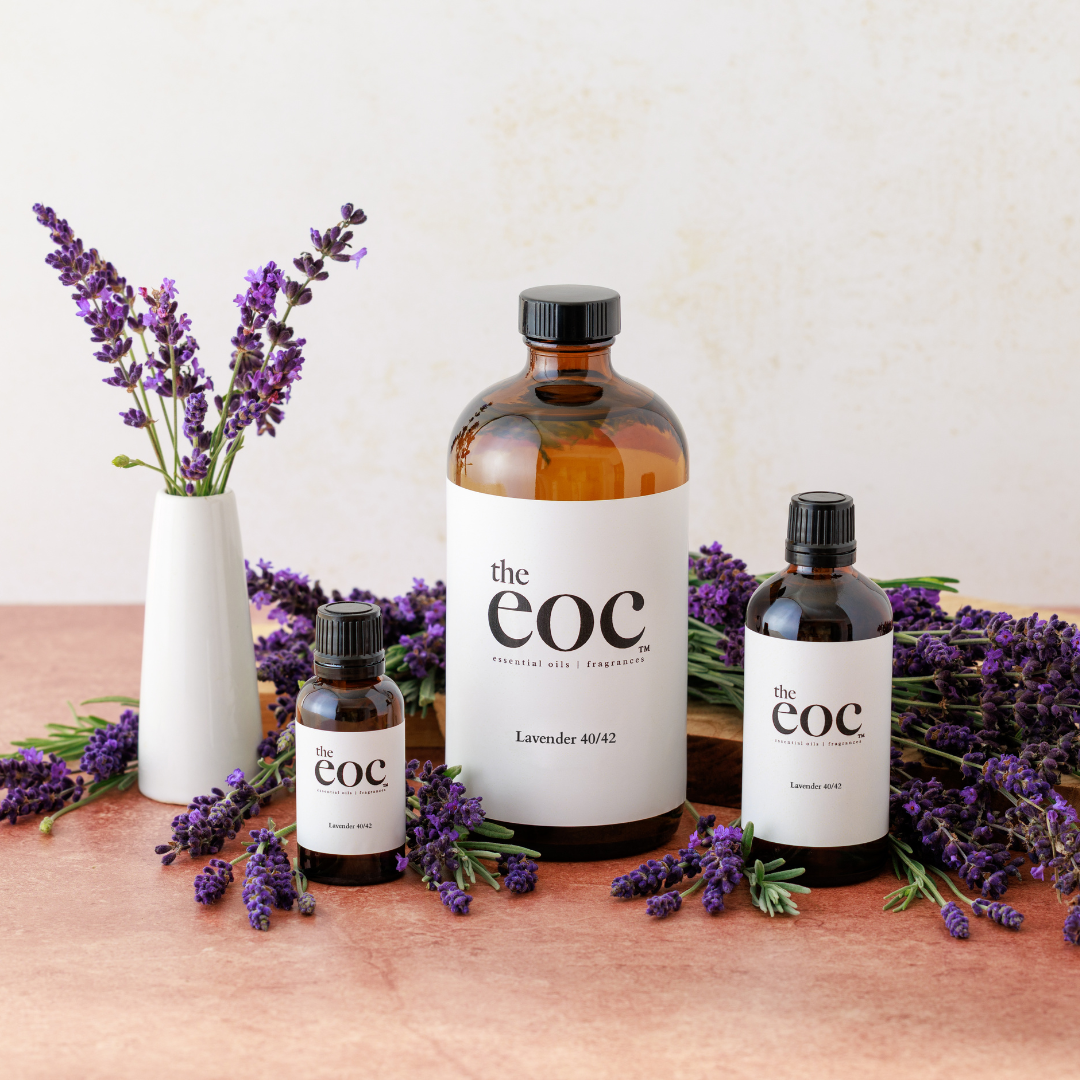
Lavender 40/42 Essential Oil
There are over 40 species of Lavender plants and each of those possesses different characteristics based on the plant itself, the region in which it is grown, and the conditions it experiences before harvest. All of these things, combined with the variables in the distillation process itself, play a part in creating differing aromas in the essential oils extracted from the plants. Lavender Essential Oil is extremely popular and is an ingredient that often plays a large and important role in the final aroma of many scented goods. Variation in the aroma of lavender could have a noticeable effect on the finished product. There are some applications, such as soapmaking and other batch-made products, that are made over and over again and would benefit from a scent that can be consistent from one batch to the next. Lavender 40/42 Essential Oil is an amazing product that can help to achieve that consistency. Lavender 40/42 Essential Oil was created to achieve a standardized Lavender aroma that can be replicated, batch after batch, with very little variation. It was formerly made by combining a variety of different distilled lavender oils to reach a ratio of 40% Linalool and 42% Linalyl Acetate. More recent advances now allow the isolated compounds of Linalool and Linalyl Acetate to be added to Lavender Essential Oil to reach the desired 40/42 ratio. Linalool and Linalyl Acetate are the two primary components of Lavender Essential Oil that are responsible for the classic Lavender aroma. Linalool is a monoterpene alcohol that is found in many herbs, including Lavender. It has been found to contain beneficial calming and soothing properties as well as a unique aroma that can be described as fresh, floral, and woodsy. Linalyl Acetate is a phytochemical that is found in many flowering plants such as Lavender. It is the acetate ester of linalool, which means that the two often occur together. Linalyl Acetate has a sweet, herbal, and floral scent. The balance of 40% Linalool and 42% Linalyl Acetate results in a consistent, distinctive fresh floral aroma that is instantly recognizable as lavender. Isolating these compounds and adding them to different Lavender Oils also allows Lavender 40/42 Essential Oil to be more cost-effective. The prices of different Lavender oils can vary from year to year depending on the harvest in the significant cultivation areas. The ability to augment different oils to reach the correct ratio, means Lavender Essential Oils with different chemical compounds can be used and the 40/42 balance can still be achieved. This allows for the production of a Lavender Essential Oil whose cost is less affected by a fluctuating market. Here are a few recipes that benefit from the aromatic consistency of Lavender 40/42 Essential Oil… Frolic in the Field Roll-On Perfume Ingredients 10 ml Amber Glass Roll-On Bottle ⅓ oz of Fractionated Coconut oil 12 drops of Lavender 40/42 Essential Oil 8 drops of Litsea Cubeba Essential Oil Instructions Add the essential oils to the bottle. Fill the rest of the bottle to the top with fractionated coconut oil. Replace the rollerball and cap, and gently shake and roll across your skin. Farm Fresh Melt and Pour Soap Ingredients 1 lb Goat Milk Melt and Pour Soap Base 5 ml of Lavender 40/42 Essential Oil 50 drops of Rosemary Essential Oil 40 drops of Lemon Essential Oil Supplies Heat Safe Bowl Pot or Double Boiler Spoon or Rubber Spatula Heat Safe Soap Molds 99% isopropyl alcohol in a misting spray bottle Instructions Chop the soap base into smaller pieces and add to a heat-safe bowl. Place the bowl on top of a pot with a few inches of water in it. Bring the water to a bowl and gently melt the soap, stirring occasionally. Remove the soap from heat and add essential oils and thoroughly stir everything together. Pour into the molds and mist the top with 99% isopropyl alcohol to dissipate any air bubbles. Allow to cool and harden at room temperature for at least two hours. Remove the soap from molds and wrap tightly for storage. Herbal Power Natural Deodorant Ingredients 4 oz Glass Jar 6 tablespoons of Shea Butter 3 tablespoons of Baking Soda 5 tablespoons of Arrowroot Powder 25 drops of Lavender 40/42 Essential Oil 15 drops of Sage Essential Oil 10 drops of Tea Tree Essential Oil Instructions Add baking soda, arrowroot powder, and shea butter to a large bowl. Work the shea butter into the powders with your hands until the mixture reaches a crumbly, dough-like texture. Whip the mixture together using a hand mixer until smooth. It may seem too dry at first but it will come together after a minute or so. Transfer the mixture to a clean jar and store it at room temperature. To use, scoop out a pea-sized amount of deodorant and rub it into the armpit until it’s absorbed.
Learn more
Diffusers Decoded: Ultrasonic vs Atomizing
Aromatherapy has become widely used in many households, providing a beautifully fragrant atmosphere and helping to promote a sense of mental and physical well-being. As the demand for diffusers continues to rise, the choice between different types with varying features and designs can be overwhelming. Two of the most popular options are ultrasonic diffusers and atomizing diffusers but we must understand the nuances between the two to make the best choice for our needs. Ultrasonic diffusers have been a staple in the aromatherapy world for their accessibility and user-friendly features. Ultrasonic diffusers operate on the principle of ultrasonic vibrations, utilizing a small disc inside the unit. The ultrasonic disc, when activated, vibrates at an incredibly high frequency. These vibrations agitate the water and essential oil mixture in the diffuser reservoir, creating a fine mist. This mist is then released into the air, carrying the aroma of the oils throughout the space. Since ultrasonic diffusers rely on water, they also function as humidifiers, adding moisture to the air. This dependence on water may also slightly dilute the potency of the oils and limit their therapeutic benefits. Over time, the constant use of water-based ultrasonic diffusers can lead to a buildup of residue and mold, making regular cleaning and maintenance important for long-term use. Atomizing diffusers, on the other hand, operate through a more advanced and intricate process to deliver the amazing benefits of essential oils. These diffusers use a pump to pressurize the essential oils within the unit. The pressure forces the oils through a small nozzle, breaking them down into microscopic particles. Atomizers produce a dry mist that consists solely of these tiny essential oil particles. This dry mist remains undiluted, ensuring the full therapeutic benefits of the essential oils are released into the air. Many atomizing diffusers also come with adjustable settings, allowing users to control the intensity and frequency of the mist release. This customization helps to ensure the perfect aromatherapy experience according to individual preferences and room sizes. Atomizing diffusers are known for their efficient dispersion of essential oils over larger areas. With a broader coverage area, atomizers can transform the ambiance of larger spaces, making them ideal for both home and commercial use. Understanding the mechanics behind each diffuser helps us make an informed choice based on our preferences and the desired aromatic experience. Whether it's the gentle mist of an ultrasonic diffuser or the powerful dry mist of an atomizing diffuser, both options contribute to creating a personalized and immersive aromatherapy environment. Aroma-Ace™ Atomizing Diffuser Check out or diffuser selection HERE! You may also enjoy... Study Explores Essential Oils for Brain Health Diffuser Blends to Soothe Emotions Cinnamon: Product Highlight
Learn more
Neroli: Product Highlight
Plant Details Neroli Essential Oil is extracted from the flowers of the Bitter Orange (Citrus bigaradia) tree, an evergreen tree in the Rutaceae family. The Bitter Orange is thought to be a cross between the mandarin orange (Citrus reticulata) and the pomelo (Citrus maxima). It is native to Southeast Asia and has been naturalized in many other tropical and subtropical climates. Bitter Orange trees can grow up to thirty feet tall with a wide shrub-like appearance when not pruned. The bark of the trees is smooth and brown and studded with small thorns. Bitter Orange leaves are a rich green color with a long oval shape and oil glands dotted all over the surface. The flowers of the tree are large and white with elongated petals, growing in small clusters. Bitter Orange flowers are highly fragrant and form primarily in early summer but can spread throughout the whole year. The fruits of the tree are small and spherical but can sometimes be irregularly shaped. Bitter Orange fruits have a thick peel that shifts from green to bright orange as the fruit ripens. The pulp of the fruits is juicy and orange with an extremely sour and bitter flavor. History In Ancient China, Neroli flowers were thought to symbolize purity and fertility and were often used in bridal bouquets. This tradition developed the expression “to gather orange blossoms” which came to refer to seeking a wife. Neroli Essential Oil was used by ancient Egyptian priests and priestesses for anointing during spiritual rituals while the flowers were also used in incense. The oil and flowers were also used by Egyptians to promote general health and well-being. The Bitter Orange tree and its fruits spread from its home in Southeast Asia through India and into the Middle East as early as 700 CE. The fruit was then brought to Europe by Genoese travelers. Bitter Orange trees later made their way into Spain with the Moors in the tenth century. Over the years the tree became an emblem of Seville and Andalusia as a whole. This is the reason the tree is also referred to as the Seville orange. Spain was responsible for introducing the Bitter Orange tree to Florida, islands in the Caribbean, and parts of South America where it escaped cultivation and became feral, growing near small streams in wooded areas. The name Neroli is derived from Nerola, a town near Rome in Italy. During the seventeenth century, Anne Marie Orsini, a French princess, was the Duchess of Bracciano and Princess of Nerola. She fell in love with the scent of Neroli flowers after experiencing their blooms in the Spring. She began using Neroli Essential Oil to fragrance her baths, clothing, and gloves, quickly making the scent a fashionable fragrance and cementing its place in the world of perfumery. Extraction Bitter Orange flowers intended for essential oil production are harvested sometime between late April and early June when the blossoms are just beginning to open. The flowers are harvested by hand on warm, sunny days to ensure maximum oil yield. Neroli Essential Oil is extracted from the flowers through hydrodistillation. One kilogram of Neroli flowers will generally yield around one gram of Neroli Essential Oil. The resulting essential oil is thin and clear with an exotic and sweet floral aroma. Benefits & Uses When used in aromatherapy, Neroli Essential Oil has been found to combat feelings of stress and tension, helping to alleviate negative thoughts and balance emotions. It may help to promote feelings of comfort and calm when dealing with grief or sadness, working to uplift the mood and generate positivity. Neroli Essential Oil is thought to clear the mind and encourage a state of tranquility which may help with grounding and focusing of intentions during meditation and other spiritual practices. Diluted and used topically, Neroli Essential Oil is known to hydrate and cleanse the skin while helping to eliminate texture and promote skin cell regeneration for a smooth and firm complexion. It has been found to help regulate oil production in the skin and combat damage from air pollution and environmental issues, working to soothe acne and prevent new blemishes. Neroli Essential Oil is thought to minimize the appearance of fine lines and wrinkles while also diminishing scars and hyperpigmentation. The unique aroma of Neroli Essential Oil makes it a widely loved ingredient in perfumery. It is often present in high-end floral blends and blends well with citrus elements, woody notes, and other florals. Here are some recipes using Neroli Essential Oil that we love... Loving Harmony Diffuser Blend Ingredients 3 drops of Neroli Essential Oil 3 drops of Rose Essential Oil 3 drops of Jasmine Absolute Instructions Add water to your diffuser up to the fill line. Add drops of the essential oil blend. This diffuser blend recipe is formulated for a 200ml ultrasonic diffuser. Adjust the amount according to the size and directions of your diffuser. Fresh Face Smoothing Toner Ingredients 4 oz Amber Glass Bottle 2 oz of Witch Hazel Extract 1 oz of Distilled Water ½ oz of Sweet Almond Oil 15 drops of Neroli Essential Oil 15 drops of Geranium Essential Oil 10 drops of Frankincense Essential Oil 10 drops of Lavender Essential Oil Instructions Mix all ingredients in a 4 oz glass amber bottle. Shake well to combine. To use, soak a cotton round with the toner and then gently rub it over the face and neck. Shake well before each use. Store in a cool dark place for extended shelf life. Tranquil Presence Grounding Roll On Ingredients 10 ml Amber Glass Roll-On Bottle 1/3 oz of Sweet Almond Oil 4 drops of Neroli Essential Oil 4 drops of Clary Sage Essential Oil 2 drops of Patchouli Essential Oil Instructions Add the essential oils to the bottle. Fill the rest of the bottle to the top with fractionated coconut oil. Replace the rollerball and cap, and gently shake and roll across your skin. Positive Radiance Shower Steamers Ingredients Witch Hazel Extract in a Misting Spray Bottle Hard Plastic or Metal Molds 1 cup of Citric Acid 2 cups of Baking Soda 10 drops of Neroli Essential Oil 10 drops of Sweet Orange Essential Oil 5 drops of Peppermint Essential Oil Instructions Combine all the ingredients in a bowl and mix well using your hands. Spritz a small amount of witch hazel onto the top of the powder mixture and stir it in. Repeat this process until the mixture packs together easily with a texture similar to wet sand. Scoop the mixture into each mold one at a time and pack them down tightly. Allow them to dry for at least 24 hours. To use, take 1 shower steamer into the shower and wet it under the stream of water. Place the steamer at the far end of the bath/shower stall away from the direct flow of water to help it last longer. Fruit & Flora Perfume Mist Ingredients 8 oz Amber Glass Bottle with Spray Top 3 oz of Distilled Water 4 oz of High Percentage Alcohol 5 ml of Vegetable Glycerin 5 ml of Fractionated Coconut Oil 10 drops of Neroli Essential Oil 10 drops of Grapefruit Essential Oil 10 drops of Bergamot Essential Oil 5 drops of Ylang Ylang Essential Oil Instructions Add all ingredients to the bottle and shake well to combine. Spritz all over your body for a unique floral and citrus scent. Shake before each use. You may also enjoy… Oregano: Product Highlight Cinnamon: Product Highlight Essential Oils & Crystals: Aquamarine Autumn Gold: Brightening Turmeric Soap
Learn more
Cinnamon: Product Highlight
Plant Details Cinnamon (Cinnamomum zeylanicum), also called True Cinnamon or Ceylon Cinnamon, is a small evergreen tree in the Lauraceae family. The tree is native to Sri Lanka and thrives in tropical regions with heavy rainfall, leading to cultivation in other areas such as Bangladesh, India, Indonesia, Brazil, and parts of the Caribbean. Cinnamon trees grow to be thrifty to fifty feet tall with thick rust-colored bark along the trunks. The leaves of the tree are oblong and oval, reaching three to seven inches long. Cinnamon leaves are dark green and glossy with a leathery texture that hardens as the tree ages. The flowers of the tree are small and greenish-white in color, growing in loose, branching clusters at the ends of branches. Cinnamon trees produce small purple fruits called drupes, each containing a single seed. Cinnamon trees reach maturity at around two to three years after planting when they have reached approximately six feet tall. The bark of the tree will then be thick and brown and the leaves will have hardened. Both Cinnamon Bark and Cinnamon Leaf are harvested for essential oil extraction. History The English name Cinnamon is derived from the Arabic ‘amomon’ and the Hebrew word ‘qinnamon’, both meaning fragrant spice plant. In early Modern English, Cinnamon was also referred to as Canel or Canella which comes from the Latin word for tube. This name was adopted due to the bark's tendency to retract and roll into a tube while drying. Cinnamon is believed to be one of the oldest and most valued spices in the world and was imported to Ancient Egypt as early as 2000 BCE. It is said that during this time the value of Cinnamon was close to that of gold and any person possessing it was considered to be wealthy. Ancient Egyptians used Cinnamon during the embalming process and as an ingredient in an incense called Kyphi, used in medicine and spiritual practices. A Greek poem from the seventh century BCE notes that Cinnamon was believed to grow alongside myrrh and labdanum in Arabia and that the revered plants were protected by winged snakes because of their value. In Rome, a pound of Cinnamon was so valuable that it could cost the equivalent of fifty months wages according to an account by Pliny the Elder. It was sometimes used in funeral pyres to mask the smell of burning flesh but was used sparingly due to the cost. In the year sixty-five CE, Emperor Nero burned a year's worth of the stock of Cinnamon at his wife's funeral, as a show of wealth and respect for her. Europeans viewed Cinnamon as a symbol of high-ranking social status during the Middle Ages, with only the wealthy class able to afford spices imported from the East. During this time it was used in cooking and in treatments for indigestion and stomach discomfort. Grave robbers in the fifteenth century were known to adorn themselves with essential oil blends containing Cinnamon to help protect against the plague. The Cinnamon tree as a whole was thought to symbolize good fortune and wealth and Cinnamon Essential Oils are thought to attract those things. Extraction Cinnamon trees reach maturity around two to three years after being planted at which point both the leaves and bark can be harvested for essential oil production. Harvest typically takes place from May to August and again in November depending on the precipitation and soil fertility of the area. It is ideal to harvest Cinnamon Bark during a rainy period when it can be more easily peeled from the branches. Cinnamon trees may be harvested two to three times per year by cutting stems at the ground level. This promotes the growth of additional side shoots, increasing the yield of each tree and making future harvest easier. After the branches or side shoots of the Cinnamon tree are harvested, the out bark is stripped away and the inner bark is peeled off in long strips. The strips are then left out in a well-ventilated and semi-shaded area for four to six hours where they naturally roll into tubes as they dry. The dried Cinnamon Bark tubes, called quills, are crushed and broken down into smaller pieces before being placed into the still, maximizing the amount of material that is processed in each batch. Cinnamon Bark Essential Oil is extracted from the inner bark of the tree through steam distillation. The resulting essential oil is thin and clear to pale yellow in color with a warm, spicy, and sweet aroma. Cinnamon Leaves are harvested when their color deepens to dark green and they have hardened. They are clipped from the tree mechanically or by hand and air-dried for several days before processing. The dried Cinnamon Leaves are packed tightly into the still to ensure maximum oil yield. Cinnamon Leaf Essential Oil is extracted from the leaves of the tree through steam distillation. The resulting essential oil is thin and pale brown in color with a spicy, bitter, and woodsy aroma. Benefits & Uses Extracted from different parts of the same plant, Cinnamon Bark Essential Oil and Cinnamon Leaf Essential Oil share many benefits but also have some properties that are unique to each oil. Used in aromatherapy, Cinnamon Essential Oil of both types has been found to ground and calm the mind while also relaxing and soothing the body. Cinnamon Oil is thought to alleviate feelings of stress, nervous tension, and depression while helping to encourage a positive and uplifted mood. It is known to increase physical and mental energy levels which can help combat exhaustion and faintness while also working to enhance cognitive function. Cinnamon Essential Oil has been found to improve focus and maintain alertness, working to extend the attention span and improve memory retention. It may also help support healthy eating habits by curbing cravings and facilitating the feeling of being full. Cinnamon Essential Oil is believed to boost the immune system to help fight illness while also helping to relieve cold and flu symptoms. It is thought to break up congestion and relieve coughs and sneezing as well as working to soothe painful headaches. Cinnamon can help to diminish unwanted odors around the home and freshen the air with a warm and comforting aroma. When diluted and used topically, both Cinnamon Essential Oils may help to soothe discomfort in the body and support healing. It has been found to alleviate skin dryness and reduce inflammation to calm irritation and skin issues such as acne and rashes. Cinnamon Essential Oil is believed to diminish signs of aging and tone the skin for a rejuvenated and smooth complexion. It may help to cleanse the skin and combat bacteria that may lead to blemishes and acne. Used in haircare, Cinnamon is thought to cleanse the scalp and relieve dryness and dandruff while also working to reduce hair falling and thinning and boost hair growth. Cinnamon Essential Oil has been found to calm inflammation and swelling while also helping to reduce pain and stiffness in muscles and joints. It is thought to lessen blood flow to wounds and combat bacteria to help wounds heal quickly while avoiding infection. Cinnamon Oil is known to help alleviate stomach discomforts such as gas and bloating while working to improve metabolism and support healthy digestion. It is also believed to offer relief during the menstrual cycle by soothing cramps and abdominal pain and helping to regulate menstrual flow. Here are some recipes using Cinnamon Essential Oils that we love... Cozy Comfort Diffuser Blend Ingredients 3 drops of Cinnamon Bark Essential Oil 3 drops of Peppermint Essential Oil 3 drops of Lavender Essential Oil Instructions Add water to your diffuser up to the fill line. Add drops of the essential oil blend. This diffuser blend recipe is formulated for a 200ml ultrasonic diffuser. Adjust the amount according to the size and directions of your diffuser. Soothing Warmth Aromatherapy Heating Pad Supplies 1 yard of Flannel Fabric Thread in Matching Color 3 cups of Uncooked Rice 20 drops of Cinnamon Leaf Essential Oil 20 drops of Rosemary Essential Oil 20 drops of Eucalyptus Essential Oil Instructions Cut the fabric into 2 rectangles of equal size and place one on top of the other with the right sides together. With a machine or by hand, carefully sew along each side, leaving a 2-inch opening on one side. Turn fabric outside in. Add the rice and essential oils to a bowl and gently stir to coat the rice. Fill the bag with the scented rice mixture. Sew the opening closed and use your hand to evenly distribute the rice throughout the pad into a relatively flat shape. To use, place the pad in the microwave and heat it in 20 seconds increments until you achieve the level of heat you desire. Place on the area causing pain on and off for 15-minute increments. Tummy Troubles Soothing Bath Soak Ingredients 1 cup of Epsom Salt ½ cup of Coarse Mineral Sea Salt ¼ cup of Fractionated Coconut Oil 10 drops of Cinnamon Bark Essential Oil 10 drops of Ginger Essential Oil 10 drops of Lavender Essential Oil Instructions Mix all the ingredients thoroughly and store them in an airtight container. Add a handful to a warm bath and soak. Smooth & Serene Toning Facial Mist Ingredients 4oz Amber Glass Bottle with Spray Top 2 oz of Witch Hazel Extract 1 oz of Distilled Water ½ oz of Vegetable Glycerin ½ oz of Sweet Almond Oil 10 drops of Cinnamon Leaf Essential Oil 10 drops of Frankincense Essential Oil 10 drops of Chamomile Essential Oil Instructions Mix all ingredients in a 4oz glass amber bottle. Replace the spray top and shake well to combine. After cleansing, spray generously over the face and neck. Shake well before each use. Positive Glow Uplifting Roll On Ingredients 10ml Amber Roll-On Bottle ⅓ oz of Fractionated Coconut Oil 2 drops of Cinnamon Bark Essential Oil 2 drops of Cinnamon Leaf Essential Oil 3 drops of Sweet Orange Essential Oil 3 drops of Rosemary Essential Oil Instructions Add all the ingredients to the roll on the bottle and shake well to combine. Roll onto the neck and wrists to calm and uplift the mind. You may also enjoy... Citronella: Product Highlight Helichrysum: Product Highlight Immune Health: Meet the Ingredients Essential Oils: Crystals: Moonstone
Learn more
Citronella: Product Highlight
Plant Details Citronella (Cymbopogon nardus) is an aromatic perennial grass plant in the Poaceae family. It is believed to have originated in Sri Lanka and now grows natively in tropical regions of South Asia, including India and Vietnam, as well as in Africa, from southern Sudan to South Africa. Citronella grows in clumps that can reach between five and eight feet in height and three to five feet wide. The plant is a tall grass with long, narrow blade-like leaves that are bright green in color. Citronella flowers are small and cream-colored, growing in narrow clusters at the end of stems that extend beyond the grassy foliage. History The name Citronella is derived from the French word ‘citronelle’ which means ‘lemon liquor’ and likely refers to the plant's citrusy aroma. The plant's leaves and extracted essential oil have been used in perfumery and religious practices for centuries. Citronella Oil has been utilized in traditional medicine practice across Sri Lanka and other parts of southern Asia to soothe pain and inflammation and repel insects. In the seventeenth century, the first evidence of the use of Citronella Essential Oil was reported by Dr. Nicolas Grim. The use of the oil grew and Sri Lanka became one of the foremost exporters during the eighteenth century before being pushed out of the market when larger countries such as Indonesia began production. Extraction Citronella plants that are grown for essential oil production can be harvested around six to eight months after planting and can continue to be harvested every three months. The leaves are cut from the plant between four to eight inches from the ground and are left to wither and dry slightly in the field for a couple of days before being transported for extraction. One hundred acres of citronella plants can produce around one hundred and fifty pounds of Citronella Essential Oil. Yield may vary depending on the practices of the plantation and the age of the plants. Citronella Essential Oil is extracted from the grassy leaves of the plants through the process of steam distillation. The resulting essential oil is thin and clear to yellow in color, with a sweet citrusy, and herbaceous aroma. Benefits & Uses When used in aromatherapy, Citronella Essential Oil has been found to soothe and protect the body, mind, and spirit. It is known to combat feelings of stress and anxiety while encouraging a positive and uplifted mood. Citronella Essential Oil may help ease the pain of headaches and migraines and give the mind and body a boost of energy to help avoid fatigue. Citronella is thought to enhance mental clarity and promote deeper concentration by calming chaotic thoughts and grounding emotions. It is believed to ease coughs and soothe discomfort in the throat and lungs to support healthy respiratory function. Citronella may also help to soothe nausea and calm spasms in the stomach and abdominal muscles. It is thought to help eliminate harmful germs and bacteria from the air while also diminishing unpleasant odors and leaving behind a fresh lemony scent. Citronella Essential Oil may be most well-loved for its believed ability to repel flying pest insects, such as mosquitos and flies. When diluted and used topically, Citronella Essential Oil is believed to support a healthy complexion by balancing oil production and enhancing the ability of the skin to absorb and retain moisture. It may help to protect the skin from the sun's damaging rays to slow signs of aging and promote a smooth and rejuvenated glow. Citronella Essential Oil is known to encourage quick wound healing by working to prevent the growth of bacteria and fungus and ease pain and irritation. Bacteria-fighting properties also help Citronella to diminish body odors and refresh the skin. When used in haircare, it has been found to cleanse the scalp of dandruff and dead skin, and product residue while working to soothe dryness and balance the production of sebum to combat the reoccurrence of buildup. Citronella Essential Oil is believed to help muscles relax, offering relief to pain and working to alleviate muscle spasms and cramping. It is known to support healthy circulation and ease inflammation which may help to reduce swelling, redness, and tenderness in the skin and muscles. Here are some recipes using Citronella Essential Oil that we love... Calm the Chaos Diffuser Blend Ingredients 3 drops of Citronella Essential Oil 3 drops of Sweet Orange Essential Oil 3 drops of Lavender Essential Oil Instructions Add water to your diffuser up to the fill line. Add drops of the essential oil blend. This diffuser blend recipe is formulated for a 200ml ultrasonic diffuser. Adjust the amount according to the size and directions of your diffuser. Pest Peace Insect Repelling Spray Ingredients 4 oz Amber Glass Bottle with Spray Top 1 oz of High Percentage Alcohol 1 oz of Witch Hazel Extract 1 oz of Distilled Water ½ oz of Sweet Almond Oil 10 drops of Citronella Essential Oil 10 drops of Rosemary Essential Oil 10 drops of Peppermint Essential Oil Instructions Add 2oz of high-percentage alcohol to the bottle. Add the essential oils, witch hazel, and sweet almond oil, and fill the remainder of the bottle with water, leaving a little space at the top. Shake well before each use. Mist over the body, clothing, and surrounding space to repel insects. Sweet Flora Multipurpose Hydrating Oil Ingredients 2 oz Amber Glass Bottle with Dropper Top 1 oz of Sweet Almond Oil 1 oz of Jojoba Oil 20 drops of Citronella Essential Oil 20 drops of Lavender Essential Oil 10 drops of Geranium Essential Oil Instructions Add all ingredients to the amber glass bottle and shake vigorously to combine. Add several drops to your hands and gently massage into the face, body, or scalp to hydrate and soothe. Healing Boost Foaming Bath Salts Ingredients 1 cup of Course Sea Salt ½ cup of Epsom Salt 1 oz of Unscented Liquid Castile Soap 1/2 oz of Sweet Almond Oil 20 drops of Citronella Essential Oil 15 drops of Lavender Essential Oil 10 drops of Tea Tree Essential Oil Instructions Add coarse sea salt and Epsom salt to a large bowl and mix thoroughly. Add castile soap, sweet almond oil, and essential oils to a small bowl and stir together until well combined. Add liquid mixture to salts and stir thoroughly until the mixture is fully incorporated and the salt seems to be evenly coated. Add about ½ cup to a warm bath and stir to dissolve. Headache Dissolver Roll On Ingredients 10 ml Amber Glass Roll-On Bottle 1/3 oz of Fractionated Coconut Oil 5 drops of Citronella Essential Oil 5 drops of Peppermint Essential Oil Instructions Add the essential oils to the bottle. Fill the rest of the bottle to the top with fractionated coconut oil. Replace the rollerball and cap, gently shake, and roll across the skin. You may also enjoy… Helichrysum: Product Highlight Juniper Berry: Product Highlight Purifi Blend: Meet the Ingredients Essential Oils & Crystals: Tourmaline
Learn more