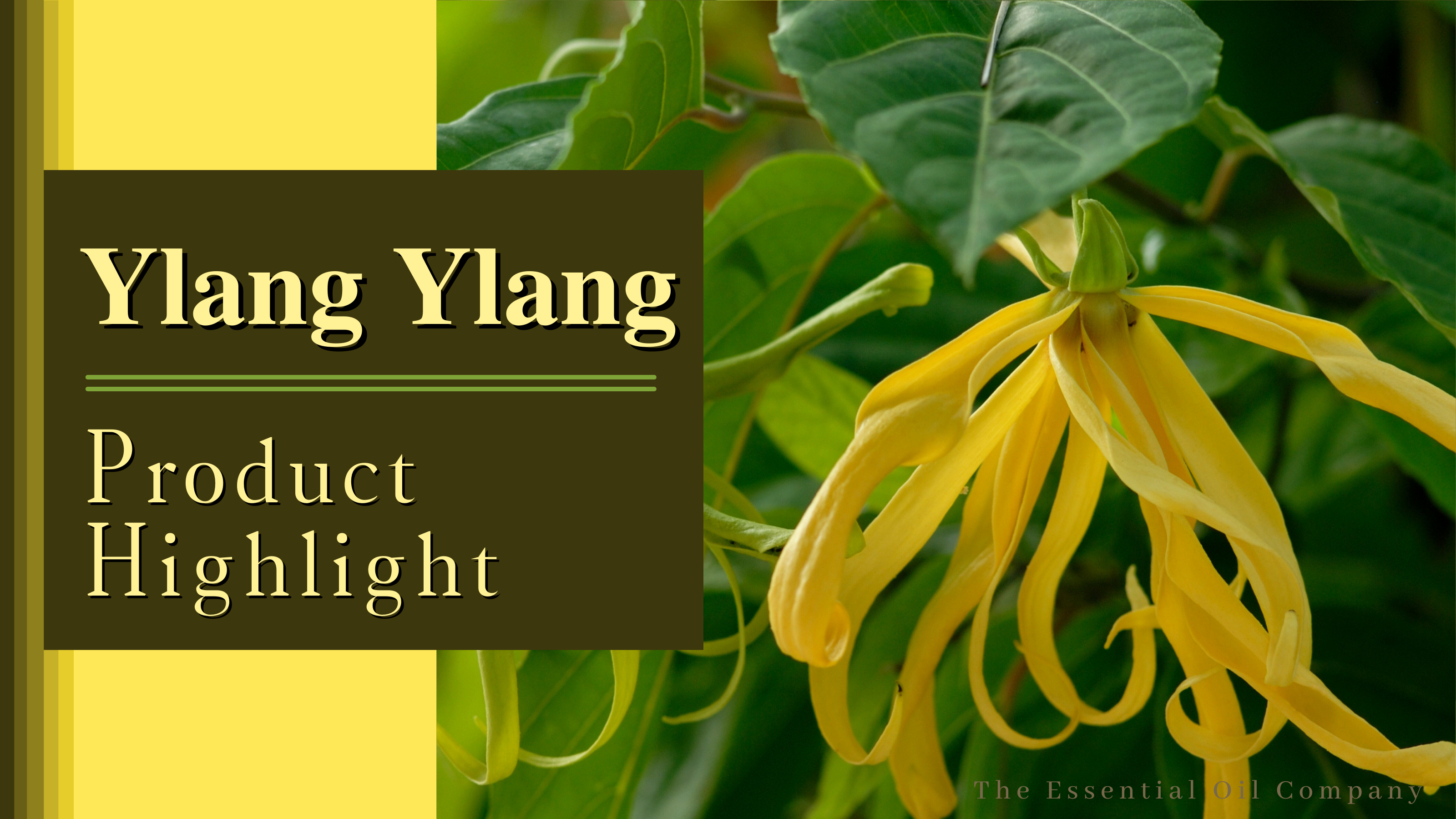
The name Ylang Ylang is pronounced "ee-lahng ee-lahng" and comes from the Tagalog language, meaning "The Flower of Flowers." Ylang Ylang essential oil is distilled from the yellow flowers of a tropical tree and has a sweet, almost fruity floral aroma.
Plant details
Ylang Ylang (Canangium odorata var. genuina, family Annonaceae) essential oil is derived from the flowers of the Ylang Ylang tree. This tropical tree is native to India and other countries surrounding the Indian Ocean, such as Malaysia, Indonesia, the Philippines and parts of Australia. It is commonly cultivated for essential oil in areas of similar climate, like Madagascar, Polynesia, Melanesia and Micronesia.
The tree is fast-growing and can put on around fifteen feet a year before reaching its final height of around forty feet. The leaves are a pointed oval shape, smooth and glossy. The flowers are yellow and star-shaped with long, narrow petals.
History
In the Molucca islands, the oil was used to make a popular hair pomade called Macassar Oil. Ylang Ylang is best known for its powerful floral scent, which makes it a sought-after perfumery ingredient. The fragrance is intense and long-lasting.
Extraction and grades
The flower harvest can begin once trees reach three to four years of age. Peak harvest runs from December to March, and one tree can be harvested multiple times over several weeks. The flowers are ready to pick when they reach a bright yellow color with a red center. To maintain the quality of the oil, the flowers must be transported and distilled within 24 hours of harvest.
Ylang Ylang essential oil is produced by hydrodistillation of the flowers. The resulting oil is light yellow with a sweet, almost fruity, floral aroma. Distillation yields five varieties of oil:
- Ylang Ylang Extra is obtained within the first two hours of distillation. It has the richest, sweetest floral scent.
- Ylang Ylang I, II and III are drawn off in the following hours at specific intervals. The aroma becomes lighter as distillation continues.
- Ylang Ylang Complete is usually achieved after six or more hours of distillation. It is still sweet and floral, with a more herbaceous undertone than the earlier fractions.
How makers use ylang ylang
Ylang Ylang is first of all a perfume material. In the recipes below it is blended with grapefruit and lemon, with lavender, with sweet orange and vanilla, and with chamomile and bergamot.
Recipes
Ylang Ylang and Citrus Diffuser Blend
- 2 parts Ylang Ylang Essential Oil
- 1 part Grapefruit Essential Oil
- 1 part Lemon Essential Oil
The original recipe uses about 0.4 mL of oil in total.
Ylang Ylang and Lavender Roll-On
Ingredients
- 10 mL Amber Glass Roll-On Bottle
- 10 mL Fractionated Coconut Oil
- 0.25 mL Ylang Ylang Essential Oil
- 0.25 mL Lavender Essential Oil
Instructions
Add the essential oils to the bottle. Fill the rest of the bottle to the top with fractionated coconut oil. Replace the rollerball and cap, shake gently and roll across your skin.

Flower of Flowers Perfume
Ingredients
- 4 oz Amber Glass Bottle with spray top
- 1 ½ oz Distilled Water
- 2 oz High Proof Alcohol
- 2.5 mL Vegetable Glycerin
- 2.5 mL Fractionated Coconut Oil
- 0.5 mL Ylang Ylang Essential Oil
- 0.25 mL Sweet Orange Essential Oil
- 0.25 mL Vanilla Fragrance Oil
Instructions
Add all ingredients to the bottle and shake well to combine. The result is a sweet floral body spray.
Ylang Ylang and Chamomile Bath Salts
Ingredients
- 1 cup Epsom Salt
- ½ cup Coarse Mineral Sea Salt
- ¼ cup Fractionated Coconut Oil
- 0.3 mL Ylang Ylang Essential Oil
- 0.2 mL Chamomile Essential Oil
- 0.1 mL Bergamot Essential Oil
Instructions
Mix all the ingredients thoroughly and store in a tightly closing container. Add a handful to a warm bath.
Find the oil used in these recipes here: Ylang Ylang essential oil.