
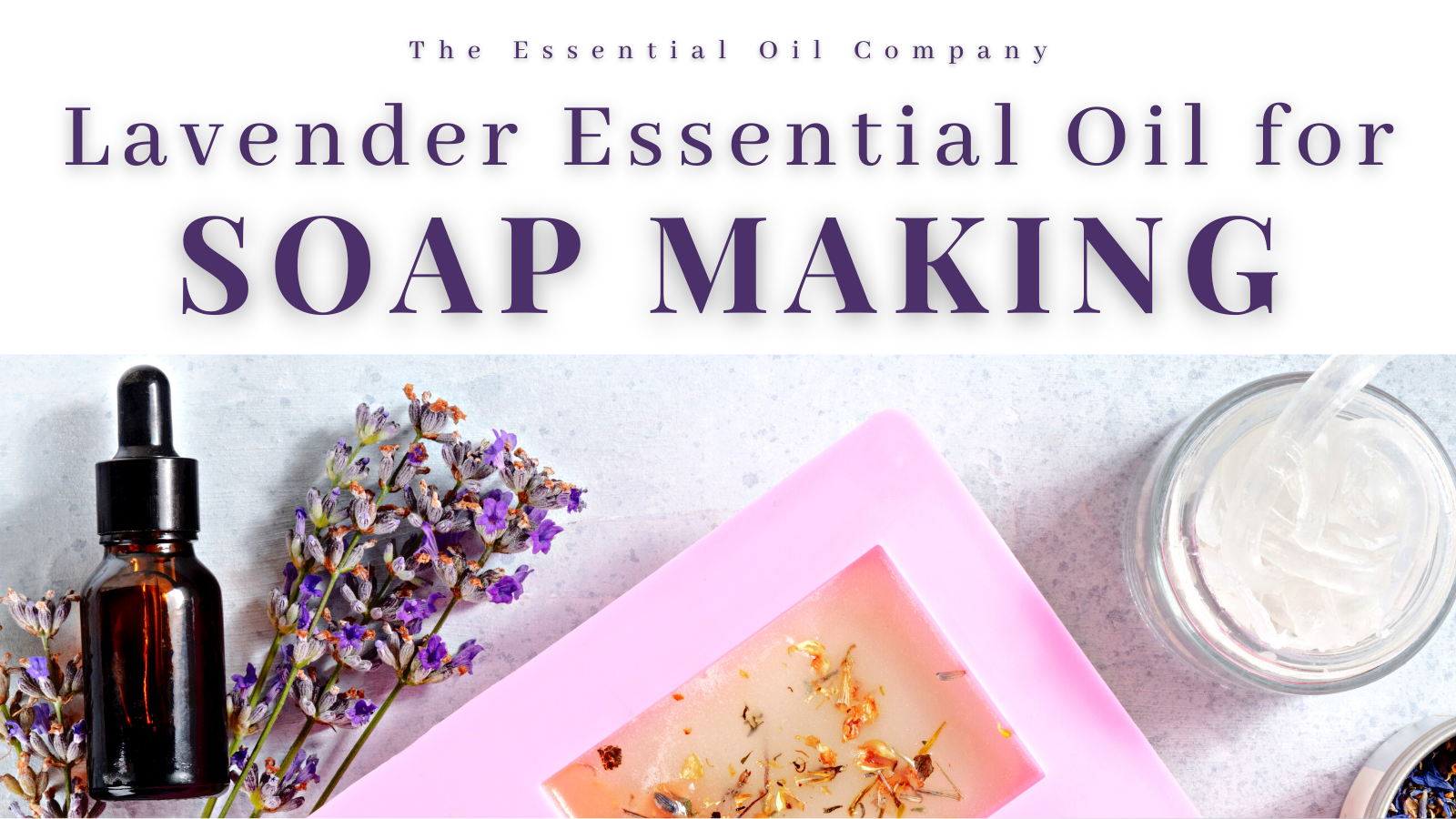
Lavender essential oil is a favorite addition to handmade soap. In fact, one of the earliest known uses for lavender was in soap. Lavender’s crisp, clean, and floral fragrance makes it favored among soap makers and soap users alike. Lavender can stand alone as a fragrance for soap but is also great for blending with other essential oils.
As a bar of lavender soap suds up, the scent is released through the heat and steam produced by the water. Lavender essential oil can also be used in soap designed for washing laundry, dishwashing soap, and household cleaners.
Here are a few simple soap recipes built around lavender essential oil. These recipes are formulated within safe usage rates for the essential oils used. Always do a patch test when using essential oils topically for the first time and discontinue use if irritation occurs. Soap making involves working with some caustic ingredients and high temperatures. Be sure to always wear the appropriate protective gear and use safe practices when making soap.
Lavender and Oatmeal Cold Process Soap

In this recipe, lavender and frankincense essential oils are combined with rolled oats, while a 5% superfat makes the bar more moisturizing.
Ingredients
- 15 ounces Olive Oil
- 11 ounces Palm Oil or Beef Tallow
- 8 ounces Coconut Oil
- 4.8 ounces Sodium Hydroxide Lye
- 12 ounces Distilled Water
- 1.25 ounces Lavender Essential Oil
- 1 ounce Frankincense Essential Oil
- 1.5 cups Rolled Oats
Supplies
- 10-inch silicone loaf mold
- Immersion blender
- Digital kitchen scale
- Small bowl for essential oils
- Glass bowl for lye mixture
- Large glass or stainless steel bowl for oils
- Pot or double boiler
- Spoon or rubber spatula
- Gloves
- Safety glasses or goggles
Instructions
- Measure 1.25 ounces of lavender essential oil and 1 ounce of frankincense essential oil into a small glass bowl and set aside.
- Weigh each vegetable oil and then combine them in a large bowl. Place the bowl on top of a large pot ⅓ to ½ full of water. Bring the water to a boil. Heat the oils until fully melted and blended, stirring occasionally.
- Weigh out the lye and water into two separate bowls. Slowly pour the lye into the water and gently stir until the lye has fully dissolved and the liquid is clear. Set aside to cool.
- Allow the lye water and the oil to both cool to 100° to 120°F ensuring they are within 10 degrees of each other.
- Place your immersion blender into the oils, tapping it on the bottom of the bowl to release any air bubbles. Slowly and gently pour your lye water into your oil mixture. You can pour down the side of your bowl or down the shaft of your immersion blender to reduce the chance of splashing.
- Pulse your blender a few times, watching as the oils and lye start to combine. Switch between short pulses and stirring with the blender until the mixture comes together to a light trace.
- Add the essential oils and stir them in. Continue to stir until you reach a thin medium trace. Do not blend in the essential oils to avoid the soap thickening too quickly.
- Add the rolled oats and use a spoon or rubber spatula to swirl them throughout the soap mixture.
- Pour the soap mixture into the mold, using a spoon or spatula to scrape the bowl. Gently tap the mold on your work surface to help get rid of any air bubbles.
- Allow the soap to sit in the molds for 24-72 hours at room temperature. Unmold the soap, cut into bars, and allow to cure for 4-6 weeks.
Lavender Swirl Melt and Pour Soap

Lavender essential oil comes together with dried lavender buds and lavender colorant to create a full lavender showcase in this fun and simple melt and pour recipe. The short list of ingredients and easy to execute swirl technique make this a great project for beginners.
Ingredients
- 1 pound Shea Butter Melt and Pour Soap Base
- 10ml Lavender Essential Oil
- Lavender Liquid Color
- 1/2 cup Dried Lavender Buds
Supplies
- Heat Safe Bowl
- Pot or Double Boiler
- Spoon or Rubber Spatula
- Heat Safe Soap Mold
- 99% isopropyl alcohol in a misting spray bottle
Instructions
- Chop 1 pound of melt and pour soap base into smaller pieces and add to a heat safe bowl.
- Place the bowl on top of a pot with a few inches of water in it. Bring the water to a boil and gently melt the soap, stirring occasionally.
- Remove the soap from heat and add lavender essential oil and thoroughly stir everything together.
- Add a generous amount of lavender liquid color and stir a few times to create a purple swirl in the soap mixture.
- Pour into your mold or molds and mist the top with 99% isopropyl alcohol to dissipate any air bubbles.
- Sprinkle the dried lavender buds on top and gently press with a spoon to help them adhere.
- Allow to cool and harden at room temperature for several hours.
- Remove the soap from molds and wrap tightly for storage.
Lavender and Tea Tree Solid Shampoo
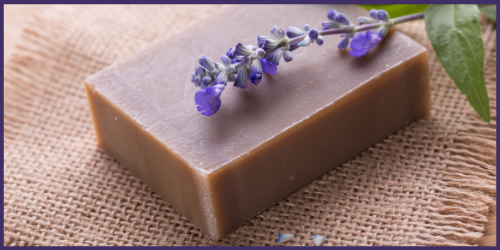
Lavender soap can be made for your hair as well as your skin. Lavender and tea tree essential oils give this cold process shampoo bar a fresh and floral scent.
Ingredients
- 9 ounces Coconut Oil
- 9 ounces Palm Oil
- 8 ounces Castor Oil
- 10 ounces Distilled Water
- 5 ounces Sodium Hydroxide Lye
- 1.5 ounces Lavender Essential Oil
- 0.5 ounce Tea Tree Essential Oil
Supplies
- Heat Safe Soap Mold
- Immersion blender
- Digital kitchen scale
- Small bowl for essential oils
- Glass bowl for lye mixture
- Large glass or stainless steel bowl for oils
- Pot or double boiler
- Spoon or rubber spatula
- Gloves
- Safety glasses or goggles
Instructions
***Make sure to wear safety glasses or goggles, gloves, and long sleeve clothing. Working with lye and high temperatures requires caution and safe practices. Always make soap in a well-ventilated area.
- Measure and combine your essential oils and set aside.
- Weigh each oil and combine into a large bowl. Place the bowl on top of a large pot that is about 1/3 full of water and bring the water to a boil. Heat the oils until fully melted and incorporated, stirring occasionally.
- While your oils are melting, weigh out the lye and water in two separate bowls. Slowly add the lye to the water while gently stirring until the lye is fully dissolved and the liquid is clear.
- Let your oils and lye mixture both cool to 130 degrees or below, ensuring that they are within 10 degrees of each other.
- Place your immersion blender into the oils, tapping it on the bottom on the bowl to release any air bubbles. This is a safety precaution that prevents the bubbles from coming to the surface when you begin mixing in the lye.
- Slowly and gently pour your lye water into your oil mixture. You can pour down the side of your bowl or down the shaft of your immersion blender to reduce the chance of splashing.
- Pulse your blender a few times, watching as the oils and lye start to combine. Switch between short pulse and stirring with the blender until the mixture comes together to a very light trace. This will allow time to add fragrance without the soap becoming too thick to work with.
- Working quickly, stir (do not blend) in the essential oil blend.
- Once your soap reaches about a medium trace, pour it into your mold or molds, scraping the bowl to ensure no soap is left behind. Tap the molds on your table or counter to release any trapped air bubbles.
- Allow the soap to sit in the molds for 48-72 hours at room temperature. Unmold the soap, cut into bars if using a loaf mold, and allow to cure for 4-6 weeks.
- Use and enjoy your handmade shampoo bar!
Lavender Fresh Body Wash
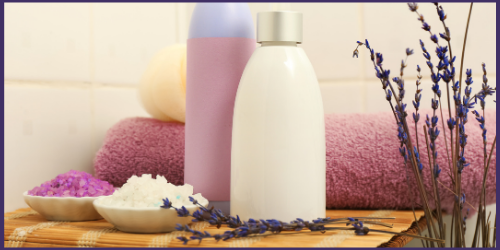
If you prefer a liquid body wash to a solid bar soap, you can still make one with lavender essential oil. Lavender, eucalyptus, bergamot, and grapefruit essential oils combine in this recipe to create a bright, herbaceous scent.
Ingredients
- 8 ounces Unscented Liquid Castile Soap
- 4 ounces Vegetable Glycerin
- 2 ounces Sweet Almond Oil
- 2 ounces Distilled Water
- 2.5 mL Lavender Essential Oil
- 2 mL Eucalyptus Essential Oil
- 1.5 mL Bergamot Essential Oil
- 1 mL Grapefruit Essential Oil
- 16 ounce Amber Glass Bottle
Instructions
- Measure liquid castile soap, vegetable glycerine, sweet almond oil, and essential oils into a bowl and stir thoroughly to combine.
- Add water, a little at a time, while stirring gently to avoid too many bubbles.
- Allow any bubbles to dissipate and pour the mixture into the bottle. Some settling may occur so shake well before each use.
You may also enjoy:

- Lavender Essential Oil for Kids


- Lavender for Beauty