
Scent has the power to shape how a space feels. It can calm, energize, comfort, or reset a room in seconds. But when you’re scenting a home shared with children, pets, or limited square footage, how you use fragrance matters just as much as what you choose.
Essential oils and fragrance oils are powerful tools. Used thoughtfully, they can support everyday rituals. Used carelessly, they can overwhelm sensitive systems. The goal isn’t to avoid scent altogether, but to understand the science behind safe, intentional use.
Why Children Respond Differently to Scent
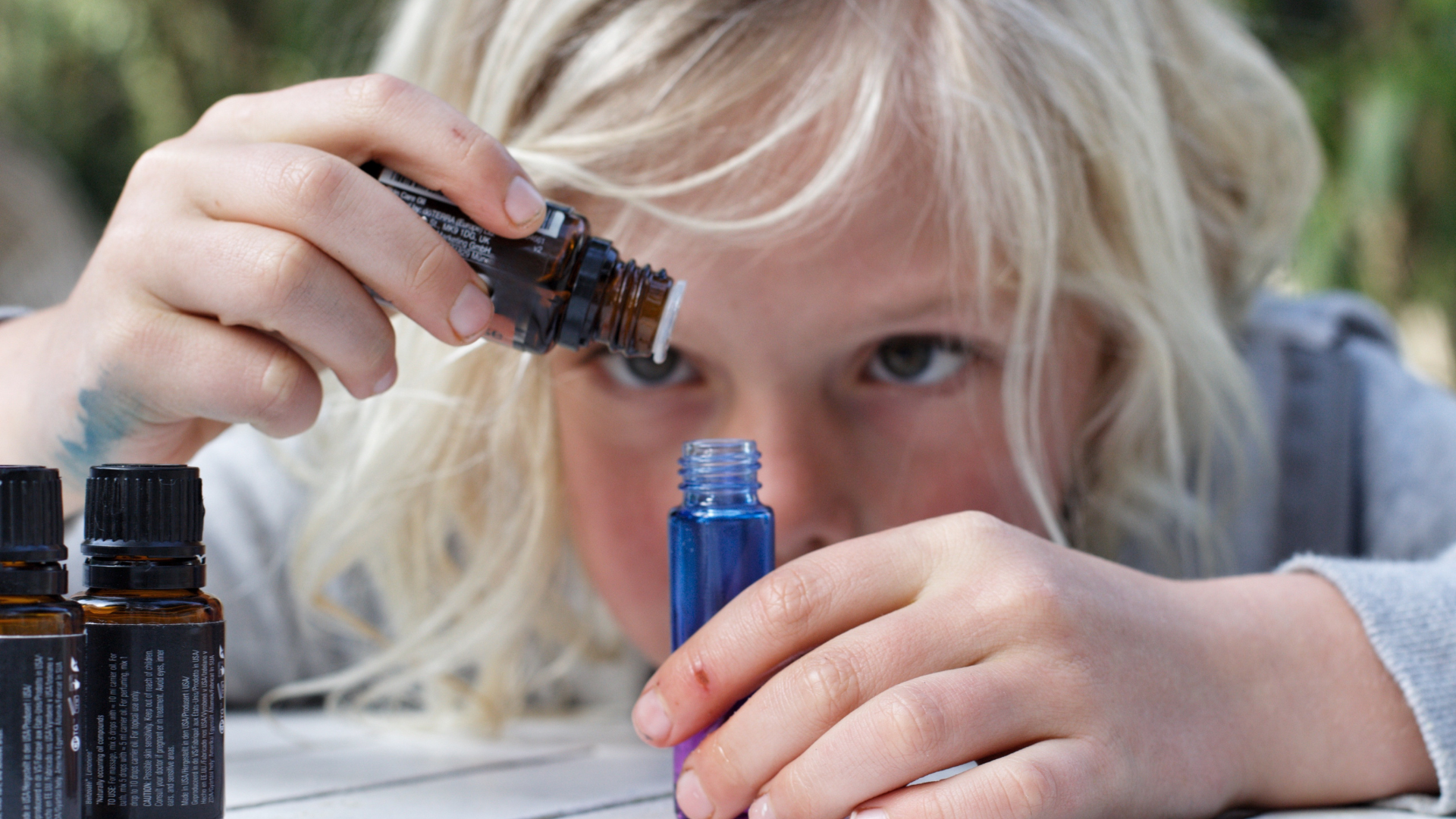
Children’s bodies process scent differently than adults. Their nervous systems, skin barriers, and respiratory pathways are still developing, which means they’re more sensitive to concentrated aromas.
Clinical guidance from pediatric and integrative health programs consistently emphasizes moderation. Essential oils are highly concentrated plant extracts, and there’s limited research supporting their use with very young children. For this reason, many professionals recommend avoiding essential oil use for children under three and keeping scent exposure light and controlled beyond that age.
When scent is used around kids, research-backed best practices include choosing oils that have been more widely studied in pediatric settings, such as lavender, sweet orange, ginger, and select citrus oils. Equally important is how scent is delivered. Personal-use formats like roll-ons, balms, and lightly scented body products allow for targeted enjoyment without filling an entire room with fragrance.
Diffusion Isn’t Always Better
Diffusers are popular, but they’re not always the gentlest option, especially in shared or small spaces. Prolonged diffusion disperses aromatic compounds into the air for extended periods, which can irritate the eyes, skin, or respiratory system in sensitive individuals.
There’s also a phenomenon called olfactory fatigue. After about 20 minutes, the brain begins to tune out a scent, reducing perceived benefit. This often leads people to add more oil, increasing exposure without improving the experience. Short diffusion sessions, lower drop counts, and scent-free breaks help prevent overuse while keeping aromas enjoyable.
Baths, Body Products, and Dilution Matter
One common misconception is that essential oils can be added directly to bath water. Because oil and water don’t mix, undiluted oils float on the surface, increasing the risk of skin and eye irritation.
A safer approach involves pre-diluting essential oils in a carrier like vegetable oil, milk, or baking soda before adding them to water. The same principle applies to topical use. Dilution isn’t optional, especially for children. Lower concentrations are widely recommended, with dilution levels increasing gradually with age.
Fragrance oils offer a different kind of control. Because they’re formulated for stability and consistency, they’re often used in lightly scented soaps, lotions, and bath products where predictability matters. For families, this can mean softer, more uniform scent experiences that don’t fluctuate batch to batch.
*For more detailed usage guidance, you can always reference the IFRA and regulatory documentation available on each product page. These resources provide recommended usage levels and safety considerations based on industry standards.
Pets and Scent: Proceed with Care
Animals experience scent far more intensely than humans. While research on essential oils and pets is still limited, veterinarians and animal health experts generally recommend caution.
Best practices include avoiding continuous diffusion in shared spaces, allowing pets to leave the room if they choose, and never applying essential oils directly to animals unless directed by a veterinarian. When introducing new scents, observation matters. If a pet shows signs of discomfort, the scent should be removed immediately.
When in doubt, your veterinarian is always the best resource.
Small Spaces Amplify Everything
In apartments, dorms, and compact homes, scent builds quickly and lingers longer. What feels subtle in a large space can become overpowering in a small one. This makes lower scent loads, shorter use times, and personal-use formats especially important.
Many people find that a roll-on before bed, a lightly scented body oil, or a brief room refresh offers the benefits of scent without overwhelming the space.
The Takeaway
Science consistently points to the same conclusion: intention matters more than intensity. Thoughtful dilution, controlled formats, and awareness of who shares your space allow scent to support daily life rather than disrupt it.
Scent should feel comforting, breathable, and adaptable. When used with care, it becomes part of a home’s rhythm instead of something that takes it over.
This information is intended for educational purposes only and is not a substitute for professional medical or veterinary advice. Always consult a qualified healthcare provider or veterinarian with specific questions or concerns.
Sources & Further Reading
-
Children’s Hospital of Philadelphia (CHOP) – Integrative Health Program
Aromatherapy for Children: What’s Safe and What’s Not -
Johns Hopkins All Children’s Hospital
Are Essential Oils Safe for Children? - ASPCA Animal Poison Control Center
- National Association for Holistic Aromatherapy (NAHA)
- International Fragrance Association (IFRA)